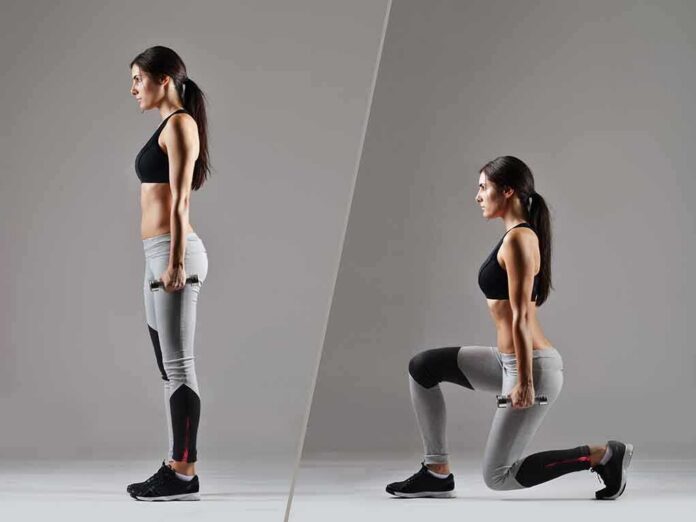
Adding weight to your ab workout does more than make it harder, it changes which muscles fire and how your whole body braces under load.
Quick Take
- Men’s Health lays out three weighted core moves: loaded hollow holds, elevated plank rows, and half-kneeling kettlebell windmills.
- Each exercise targets a different job the core does, bracing, resisting rotation, and stabilizing the hips and shoulders together.
- The routine comes with exact sets, reps, and rest times, not just vague advice to “work your abs.”
- Broader exercise science backs the idea that varied core exercises hit different muscles, though it has not directly tested weighted versus bodyweight training head to head.
A Specific Plan Replaces Vague Core Advice
Most ab advice online tells you to “engage your core” without saying what that means. The Men’s Health piece, written by Jeff Tomko, skips the vague talk. It names three exercises, explains the setup for each, and gives a number: three 40-second sets of loaded hollow holds with 20 seconds of rest between rounds. That kind of detail lets a reader actually follow the plan instead of guessing.
The loaded hollow hold asks you to lie on your back, press your lower spine into the floor, and hold a light plate or dumbbell overhead. The article says this teaches the body to brace under tension while keeping the back stable. It is a simple position, but adding weight forces the abs and glutes to work harder to keep the lower back glued to the ground.
Rotation Control And Full-Body Stability Round Out The Program
The elevated plank row adds a different challenge. Instead of a flat tabletop position, the body stays long from shoulder to toe while one arm rows a weight. That setup forces the core to resist twisting, a job regular crunches never ask of it. The article points out this anti-rotation demand as the main reason the move earns a spot in the routine.
The half-kneeling kettlebell windmill finishes the set. It combines hip mobility, shoulder stability, and core control in one motion, something a sit-up or crunch cannot touch. Together, the three moves cover bracing, rotation resistance, and whole-body coordination, which is why the article frames this trio as more complete than isolated ab work.
Why Different Core Angles Matter More Than People Think
Separate research backs the logic behind mixing exercise types, even without testing weighted moves directly. A review of core muscle activity during fitness exercises found that stability-focused moves lit up different muscles than traditional ones, with internal oblique activity peaking in stability drills and other muscles responding best to classic lifts. That supports picking varied exercises rather than repeating one movement pattern over and over.
Older electromyography studies measuring muscle activity during common ab exercises found real differences in which muscles worked hardest depending on the movement, not just how much effort a person put in. A systematic review of this research also noted the exercises studied have not been ranked clearly enough to guide progressive overload decisions with confidence. That gap is worth knowing, even though it does not undercut the basic logic of training the core from multiple angles.
What This Means For Someone Building A Routine
No study has directly compared weighted hollow holds against bodyweight versions for strength or muscle growth over months of training. That is a fair gap to note. But the exercise selection itself rests on sound reasoning, hitting bracing, rotation control, and hip-shoulder coordination instead of just repeating crunches until fatigue sets in.
For a reader over 40 looking to build real core strength, the takeaway is simple. Pick movements that challenge the trunk in different directions, add light resistance once bodyweight feels easy, and track the specifics, time under tension, rest periods, and reps, rather than chasing a burn. That is how a program becomes a plan instead of a guess.
10 Weighted Ab Exercises to Upgrade Your Workouts https://t.co/NKtT7TLvUB
— Men's Health UK (@MensHealthUK) November 12, 2026
The exercises in this routine are not complicated, but they are deliberate. Loaded hollow holds, elevated plank rows, and kettlebell windmills each ask something different of the body. That variety, backed by basic principles of muscle activation research, is what separates a thought-out core routine from a random list of moves.
Sources:
menshealth.com, public-pages-files-2025.frontiersin.org, stmarys.ac.uk, pmc.ncbi.nlm.nih.gov