Public-health guidance says your toothbrush does not need routine disinfecting, but it must be rinsed well and left to air-dry.
Story Snapshot
- Rinse with tap water, store upright, and let the bristles air-dry after each use.
- No need to soak in mouthwash or use ultraviolet gadgets for healthy people.
- Do not cover a wet brush in a closed case; trapped moisture boosts germ growth.
- Never share toothbrushes; sharing can spread bodily fluids and germs.
What the top authorities actually recommend
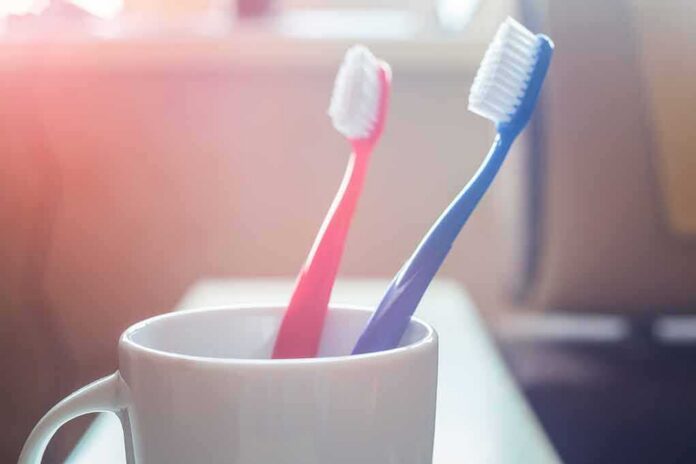
The Centers for Disease Control and Prevention advises a simple routine: rinse your toothbrush with tap water until it is clean, store it upright, and let it air-dry between uses. The American Dental Association aligns with that guidance and adds two bright lines: do not share toothbrushes and do not stash a wet brush in a sealed container, because moisture and darkness help microbes multiply. This is plain hygiene, not gadgetry. It respects how bacteria behave and how people actually live.
Public-health guidance also separates cleaning from disinfecting. Cleaning means rinsing away paste and debris so the bristles dry fast. Disinfecting means trying to kill every microbe on the brush. The Centers for Disease Control and Prevention and the American Dental Association do not call for routine disinfecting for healthy users. They specifically say you do not need to soak a brush in mouthwash, run it through a microwave, or buy an ultraviolet device for daily care. That advice prizes outcomes over theatrics.
Why the plate-vs-toothbrush comparison misleads
Plates touch many kinds of food and get fully cleaned because we reuse them for different people and meals. Toothbrushes are personal tools that touch one person’s mouth and are not shared. The health question is not “are there microbes,” but “does an extra step cut real-world illness.” Many studies show toothbrushes pick up microbes and that some treatments reduce counts in a lab. But guidance focuses on whether those steps change health outcomes for typical users, and routine disinfecting has not shown that benefit.
Rinsing matters for a simpler reason: water removes paste and debris that hold moisture. Drier bristles slow microbial growth. Consumer reporting that summarizes federal advice highlights this point and puts the emphasis back on air and time, not chemicals. Covering a wet brush in plastic traps humidity and makes a tiny hothouse for microbes. That is why both major authorities warn against sealed containers and travel caps for daily storage at home. Common sense lines up with the lab here.
Where extra caution can make sense
Healthy people can stick to rinse, upright store, and air-dry. Some clinicians discuss added steps for people with health risks, such as those with weak immune systems. Research reviews describe many ways to lower lab counts, including ultraviolet light and peroxide soaks, but they also show uneven methods and do not prove better health outcomes across the board. If you are medically fragile, talk with your dentist or physician about tailored care. Otherwise, do not overcomplicate the basics.
Two habits deserve zero debate. Never share toothbrushes, and replace your brush every three to four months or sooner if bristles fray. Sharing moves saliva and blood between people and invites trouble. Frayed bristles clean poorly and can irritate gums. Keep the brush away from the toilet plume by storing it far from the bowl and letting it dry fully between uses. Simple placement, airflow, and time beat fads and fear. That is the kind of household hygiene that respects both science and common sense.
Sources:
youtube.com, adanews.ada.org, consumerreports.org, electricteeth.com, au.lifehacker.com