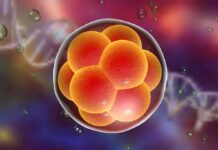
Scientists can now edit the DNA of a human embryo, and a small but growing number of biotech startups think that is close enough to a green light to start building businesses around it.
Quick Take
- Clustered Regularly Interspaced Short Palindromic Repeats (CRISPR) embryo editing remains federally banned for clinical use in the United States, blocked by congressional action rather than a single coherent law.
- Only 34 percent of peer-reviewed publications surveyed endorsed CRISPR embryo editing under any circumstances, while more than 80 percent flagged harm or safety concerns.
- Off-target DNA cuts and mosaicism, where edits take hold in some cells but not others, remain the two unsolved technical problems standing between the lab and the delivery room.
- New biotech startups are pushing into heritable embryo editing anyway, reigniting a debate the scientific community had not finished having the first time around.
The Technology That Outran the Rulebook
CRISPR works by using a guided molecular tool to find a precise location on a strand of DNA and cut it, allowing scientists to disable, repair, or replace a gene. In somatic medicine, meaning treatments applied to living patients whose edits die with them, the approach has produced genuine clinical wins. Phase I and Phase II trials of CRISPR-based cancer therapies have shown safety and efficacy results comparable to existing treatments. [11] That success is exactly what makes the embryo question so combustible. If it works in adults, the logic goes, why not start earlier?
The answer is that embryo editing is a categorically different problem. Every cell in the resulting child carries the change. Every child that child has will carry it too. The edit becomes part of the human gene pool with no recall mechanism. That is why the National Institutes of Health states flatly that it will not fund gene editing in human embryos and that reproductive human genome editing should not be attempted at this time. [7] The U.S. ban is enforced through congressional budget riders rather than a single statute, which creates a patchwork that determined private actors can navigate around. [1]
The Two Technical Problems Nobody Has Solved
Off-target effects are the first obstacle. CRISPR occasionally cuts DNA at unintended locations, and a study in human cells found that this can produce large DNA insertions that could increase cancer risk. [10] In a patient receiving a one-time infusion, that risk is serious but contained. In a germline edit, that same unintended insertion gets copied into every cell of every descendant. The second problem is mosaicism, where an edit applied to an early embryo takes hold in some cell lines but not others, producing a child who is part-edited in ways that are impossible to predict or verify before birth. [3]
Newer approaches like base editing, which chemically rewrites a single DNA letter without cutting the double helix, are generating real excitement precisely because they sidestep the cutting problem. Researchers have demonstrated embryo gene edits using base editing without the DNA damage patterns seen in conventional CRISPR. [3] That is meaningful progress. It does not, however, solve mosaicism, resolve the question of multigenerational consequences, or substitute for the societal and regulatory consensus that scientists themselves say is still missing.
What the Scientific Community Actually Thinks
A peer-reviewed analysis of 223 publications on CRISPR embryo editing found that just 76, or 34.1 percent, endorsed the practice under at least some circumstances, while 30 rejected it outright and 117 took no position either way. [2] That is not a field approaching consensus. It is a field that is genuinely, deeply divided, with the plurality choosing to withhold judgment entirely. Harvard researchers have said germline editing is likely to gain acceptance in time if safety and oversight requirements are met, but that conditional framing is doing enormous work. [5] The conditions have not been met.
This is insane.
Scientists edit human embryo genes without the DNA damage seen in CRISPR 👀
"Researchers just demonstrated a new base-editing approach that successfully edited genes in human embryos without causing the chromosome-scale damage often seen with traditional… pic.twitter.com/EP0Gu2uhDW
— SciTech Era (@SciTechera) June 6, 2026
Two new biotech startups have recently moved into heritable embryo editing, which has alarmed a significant portion of the scientific community and restarted arguments that were left unresolved after Chinese researcher He Jiankui shocked the world in 2018 by producing the first gene-edited babies without adequate oversight or consent frameworks. [3] Critics argue that the biological understanding, societal consensus, and regulatory structures required for responsible clinical use remain incomplete. Even researchers who believe germline editing might one day be ethical agree that the current moment is not that day. [13] The gap between what CRISPR can do in a laboratory and what it should do in a pregnancy has not closed. It has just become more commercially tempting to pretend otherwise.
Sources:
[1] Web – Are we getting to the point where it’s safe to gene-edit babies?
[2] Web – United States: Germline / Embryonic
[3] Web – The Ethics of Human Embryo Editing via CRISPR-Cas9 Technology
[5] Web – Gene Editing and CRISPR: The Ethical Debate Behind DNA …
[7] Web – The ethical debate on human genome editing
[10] YouTube – The Ethical Dilemma Of Genome Editing | The CRISPR Revolution
[11] Web – CRISPR gene editing carries a potential risk, study finds
[13] Web – Get to know: CRISPR gene editing pros and cons | IDT