Your brain remembers how words feel and sound more than how your muscles move when you speak.
Story Snapshot
- New research shows speech memories live mainly in sensory brain areas, not motor control zones.
- Disrupting sound and touch centers wipes out new speech learning; disrupting motor cortex does not.
- This flips a long-held belief in neuroscience about how we learn and relearn speech after injury.
- The findings could reshape speech therapy, stroke rehab, and future brain-based communication tech.
Speech learning may depend more on sensation than movement
Most of us assume speaking is all about muscle control in the lips, tongue, and jaw. For decades, many scientists agreed and pointed to the motor cortex as the main hub that learns and stores the movements for speech. A new study from McGill University and Yale University challenges that story in a direct way. The researchers report that speech learning and memory rely far more on how the brain processes sound and touch than on its movement centers.[11]
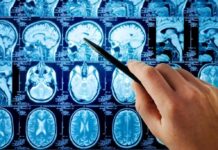
The team taught adult volunteers new speech movements, the kind you need when you learn a tricky sound in another language.[11] Then they used safe brain disruption methods, such as targeted magnetic pulses, on three areas: auditory cortex for sound, somatosensory cortex for touch and feel, and motor cortex for movement control. When they disrupted the auditory or somatosensory regions, people could no longer retain those newly learned speech patterns. When they disrupted the motor cortex, the new speech movements stayed intact.[2]
Inside the study that overturned a popular brain theory
Researchers gave people short training sessions to learn unusual speech movements and then measured how well those new movements stuck over time.[2][19] The key test was simple but powerful: which brain area matters most for keeping those memories? Results showed that blocking normal activity in sensory brain regions erased the gains. People lost the ability to reproduce the new speech sequences they had just mastered. Yet when the same disruption hit the primary motor cortex, their memory for the new speech movements did not suffer.[2]
Study co-author Nishant Rao put the point plainly. He said their findings challenge the old assumption that new speech memories depend only on changes in motor areas.[2][11] Instead, the evidence points to changes in auditory and somatosensory cortex as the main drivers of how we learn and remember speech patterns. Lead investigator David Ostry went further, saying human speech learning is extensively sensory in nature and that this changes the usual focus on frontal motor regions.[3][11]
Why this matters for stroke recovery and speech therapy
Traditional speech therapy often treats speech like a movement problem first. Clinicians drill muscle patterns and mouth positions, and technology companies build tools that track articulation and motor control. If speech memories live mainly in sensory brain areas, then therapy that ignores sound and feel may miss the real engine of change. The new work suggests that the brain learns how to speak based on how actions feel and sound, not just how muscles flex.[2]
This has obvious stakes for stroke survivors and people with apraxia of speech. If a stroke damages motor cortex but leaves sensory regions intact, the path back to speech may be more open than many think. On the other hand, injuries to auditory or somatosensory cortex could be far more serious for speech learning and relearning. That idea fits with earlier work showing that sensory memory, especially somatosensory memory, predicts how well people adapt their speech movements over time.[1]
What comes next for science and for everyday speech
This study raises hard questions for the neuroscience community. Why did so many models lean heavily on motor dominance when sensory memory keeps winning in careful experiments? Some of that may reflect academic inertia and the natural human habit of sticking with a familiar story until evidence makes change unavoidable. Follow-up work can now test larger and more diverse groups, track speech memories for months or years, and use high-resolution imaging to map the pathways from sensory cortex into motor output.[7][20]
For everyday life, the takeaway is simple enough to shape how you practice a new language. Focus on how the sounds feel in your mouth and how they ring in your ears. Rich sensory feedback is not just a bonus; it appears to be the core of how your brain locks in new speech patterns. For parents, teachers, and therapists, building speech practice around vivid sound and touch may offer a faster, more durable way to help people find their voice again.
Sources:
[1] Web – New brain study reveals speech learning works differently than we …
[2] Web – Researchers Unlock the “Sound of Learning” by Linking Sensory …
[3] Web – Research findings challenge long-held assumptions about how we …
[7] Web – Research findings challenge long-held assumptions about how we …
[11] Web – candidate roles for motor cortex in speech perception – PMC – NIH
[17] Web – Neural representation of sensorimotor features in language-motor …
[19] Web – Sensory basis of speech motor learning and memory – PNAS
[20] Web – Temporal lobe perceptual predictions for speech are instantiated in …