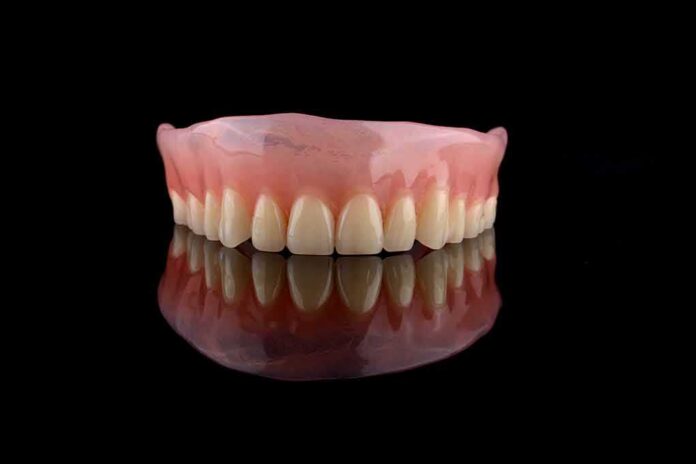
Scientists in England built a gel that convinces a tooth to grow its own enamel back, using the same biological trick the body used the first time around.
Quick Take
- Researchers at the University of Nottingham created a protein-based gel that triggers new enamel growth on damaged teeth.
- The gel works by mimicking proteins the body uses to build enamel before birth, pulling minerals straight from saliva.
- Lab tests simulated brushing, chewing, and acidic food, and the regrown enamel held up like the real thing.
- The findings come from a peer-reviewed study, but they reflect lab testing, not results from patients in a dental chair.
A Gel That Rebuilds What the Body Cannot Replace
Enamel is the hardest substance the human body makes. It is also the one tissue that never heals itself once it wears away. A new study published in Nature Communications says a specially designed gel can reverse that rule, restoring the structure and strength of human enamel in laboratory testing. The research team included scientists from Nottingham, Strathclyde, and the University of California, San Francisco.
The University of Nottingham describes the gel as a scaffold. It sits on the tooth and pulls calcium and phosphate straight out of saliva, then arranges those minerals into new crystal growth that lines up with the enamel already there. Scientists call this process epitaxial mineralization. It means the new material does not just sit on top of the tooth like a patch. It grows into the existing structure, matching its pattern layer by layer.
Borrowing a Trick From Infant Tooth Development
The gel’s design copies proteins the body uses only once in a lifetime, during the early formation of enamel before a baby’s teeth ever break through the gums. Researchers rebuilt a version of that same biological process and packaged it into a treatment that could, in theory, be brushed or painted onto adult teeth. The idea is to reopen a biological door that nature normally closes after infancy.
Lead author Abshar Hasan told ScienceDaily that regenerated enamel samples were put through tests built to copy real-world wear, including toothbrushing, chewing forces, and contact with acidic foods. He said the material behaved like healthy natural enamel under those conditions. Separate reporting states electron microscopy showed organized, crystal-like enamel structure forming within two weeks, with regrowth reaching roughly 10 micrometers in thickness.
How It Could Reach a Dental Chair
The university says the gel could be applied quickly, in a manner similar to how dentists already apply fluoride treatments today. That matters because any new dental product has to fit into a short appointment, not require surgery or weeks of recovery. A fast, simple application process is one reason researchers see a realistic path toward eventual clinical use rather than just a lab curiosity.
The study’s framing points toward two practical uses: repairing enamel worn down by erosion or acid damage, and potentially easing the sharp pain that comes from exposed dentine underneath. Both are common problems. Millions of adults deal with sensitive teeth from thinning enamel, receding gums, or years of acidic drinks and foods wearing the surface thin.
Where This Fits Among Decades of Enamel Research
This is not the first attempt to regrow enamel. A systematic review of 28 biomimetic enamel studies found that protein-based approaches consistently produce encouraging lab results, yet none has become a proven clinical standard. Fluoride and calcium-phosphate treatments like CPP-ACP remain the gold standard dentists actually use today, often paired together for the best results. A separate review of enamel regeneration research published this year put it plainly: the field is advancing in real and exciting ways, but it remains preclinical, with no human trials yet demonstrating functional enamel regeneration.
That context does not diminish what the Nottingham team reported. It explains why careful scientists describe this gel as a promising laboratory breakthrough rather than a finished product sitting on dentists’ shelves. The next steps, trials in actual patients, comparisons against fluoride and existing desensitizing treatments, and years of real-world wear testing, will determine whether this protein scaffold becomes the next CPP-ACP or joins a long list of lab successes that never left the bench.
Scientists develop a gel that could regrow tooth enamel.
Researchers at the University of Nottingham have developed a protein-based gel designed to help repair damaged tooth enamel.
The gel mimics natural proteins involved in enamel formation, encouraging minerals from saliva… pic.twitter.com/CQvQnX0o24
— Interesting World (@_fluxfeeds) November 5, 2026
For now, the honest takeaway is simple. A credible, peer-reviewed study shows enamel can be regrown and toughened in a lab setting using a biologically specific method, not a vague marketing claim. Whether that gel ends up in your dentist’s drawer depends on trials that have not happened yet.
Sources:
sciencedaily.com, bbc.com, miamiherald.com, oralhealthgroup.com, pmc.ncbi.nlm.nih.gov, lsmu.lt