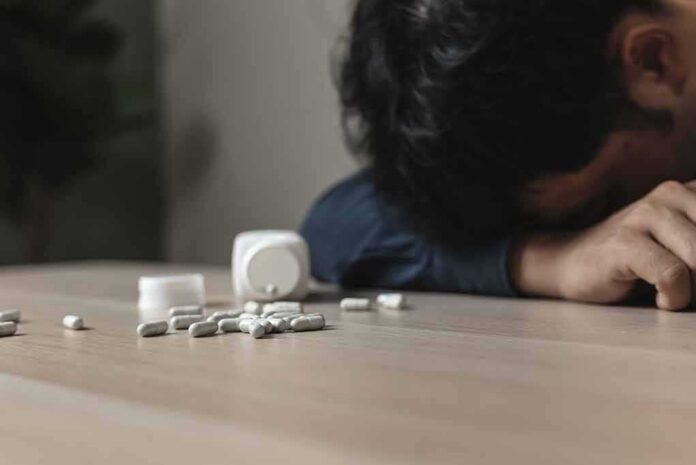
Anxiety is now the most common mental health problem facing Americans, and a new Time op-ed lays out exactly what to do about it.
Quick Take
- A Time op-ed published November 22, 2026 calls anxiety the most common mental health issue in the country.
- The piece draws a clear line between normal worry and anxiety that disrupts work, school, or relationships.
- It recommends Cognitive Behavioral Therapy, slow breathing exercises, and short daily exercise as practical first steps.
- Free online screening tools and the National Institute of Mental Health are offered as starting points for people who need help.
What The Article Actually Says About Anxiety In America
The op-ed states plainly that anxiety tops the list of mental health struggles Americans face today. It does not treat all anxiety as a medical emergency. Instead, it draws a meaningful distinction. Everyday nervousness is normal. Anxiety becomes a problem worth addressing when it lingers, grows worse, or starts interfering with your job, your classes, or the people you love.
That distinction matters more than it might first appear. National data backs up the idea that anxiety disorders are widespread, with the National Institute of Mental Health reporting that about 19 percent of adults experienced one in the past year, and nearly a third will face one at some point in their lives. Whether anxiety ranks as the single most common mental health issue depends on how researchers define and measure it, but the broader point about scale holds up.
Practical Tools The Op-Ed Recommends For Everyday Relief
The article leans heavily on Cognitive Behavioral Therapy, often called CBT, as a go-to treatment. It works by helping people spot the thought patterns that feed their anxiety and then changing them. According to the op-ed, this approach can reduce how often anxious symptoms show up and how intense they feel. Clinical guidelines from psychiatric groups back this up, noting CBT has been studied more than most other talk therapies for anxiety.
Beyond therapy, the op-ed points to two simple habits anyone can try at home. A source identified as Albano recommends slow breathing, done for ten repetitions, as a way to calm the body in the moment. The piece also cites physical activity, saying even 10 to 15 minutes a day can help people feel calmer and more in control. Medical guidelines support this too, with aerobic exercise moderately recommended for anxiety disorders, and even stronger results when paired with therapy.
Why Screening Tools Help But Should Not Replace A Diagnosis
The op-ed encourages readers to try free online screens to see if their symptoms might meet the criteria for an anxiety disorder. It also points them toward the National Institute of Mental Health for information on treatment options and finding professional help. These screens serve as a useful first step, not a final word. Research on common screening tools shows they can flag people who need a closer look, but they also produce false positives that require follow-up by a trained professional.
That gap between a quick screen and an actual diagnosis is worth taking seriously. A tool like the GAD-7 questionnaire, used widely to screen for generalized anxiety, can misclassify people based purely on statistical modeling of test results. The lesson here is common sense. Use the free tools to get a sense of where you stand, then talk to a real doctor or therapist before assuming you know your diagnosis.
What This Means For Families Dealing With Anxiety Today
The op-ed groups several anxiety disorders together, including generalized anxiety, panic disorder, phobias, and obsessive-compulsive disorder, suggesting they often share similar root causes. That broad framing makes sense for a general audience piece aimed at getting people moving toward help. But families navigating a specific diagnosis should know that treatment plans differ by disorder, and a licensed provider can tailor the approach rather than relying on general advice alone.
None of this diminishes the value of the op-ed’s core message. Anxiety is common, it is treatable, and small daily habits like breathing exercises and short walks can make a real difference. For conservative-minded readers who value personal responsibility and practical solutions over endless clinical jargon, this is a refreshingly straightforward roadmap. Take action early, use trusted tools, and get professional help when symptoms start running your life instead of the other way around.
The bigger takeaway is that anxiety does not have to be a mystery or a source of shame. The tools exist, the data backs up their usefulness, and the first step is often as simple as a few slow breaths and a short walk around the block.
Sources:
time.com, nimh.nih.gov, anxietyresearch.org, cochrane.org