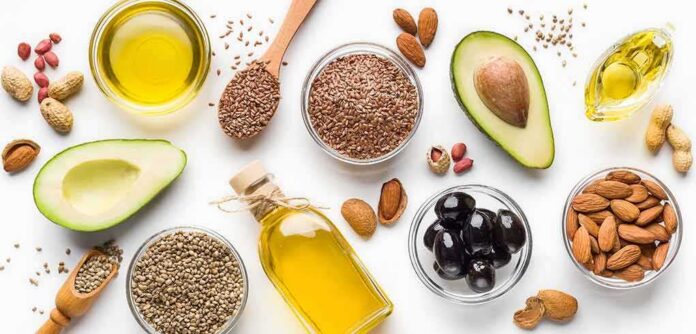
Saturated fat keeps showing up as the dietary fat most consistently tied to higher cancer risk, according to a large meta-analysis covering breast, prostate, and colorectal cancer.
Quick Take
- A 2024 meta-analysis links saturated fat to higher breast, prostate, and colorectal cancer risk, but not pancreatic cancer.
- Separate reviews find no significant link between total, animal, or plant fat and pancreatic cancer specifically.
- Earlier human data suggested unsaturated fats like omega-3s may lower pancreatic cancer risk while saturated fat raised it.
- A 2025 mouse study found oleic acid sped up pancreatic tumor growth while omega-3-rich diets slowed it.
The Research Behind the Saturated Fat Link
A systematic review and meta-analysis published in January 2024 pulled together data on fat intake and cancer across multiple organ systems. Researchers found that higher saturated fat intake tracked with greater risk of breast, prostate, and colorectal cancer. The same analysis found no significant link between saturated fat and lung, pancreatic, ovarian, or stomach cancer, showing the pattern does not hold evenly across every cancer type.
That finding matters because it pushes back against the idea that saturated fat drives cancer risk everywhere in the body the same way. Pancreatic cancer, one of the deadliest and hardest to treat cancers, did not show the same pattern. That gap sent researchers looking deeper into fat types and pancreatic tumor biology specifically, rather than lumping all cancers into one dietary story.
How Pancreatic Cancer Breaks From the Pattern
An updated systematic review and dose-response meta-analysis, summarized in a 2025 French cancer institute bulletin, compared people with the highest fat intake to those with the lowest. Total fat, animal fat, and plant fat all showed no statistically meaningful link to pancreatic cancer risk. The relative risk for total fat landed at 1.03, a number essentially indistinguishable from no effect at all.
An earlier human dietary study told a more detailed story. It found inverse associations between pancreatic cancer and several unsaturated fats, including monounsaturated and polyunsaturated fatty acids, along with omega-3s. Saturated fat and eight individual saturated fatty acids showed positive associations instead, with odds ratios ranging from 1.28 to 1.58 for people with the highest intake compared to the lowest.
What a Mouse Study Reveals About Fat and Tumor Growth
A mechanistic study published in April 2025 tested how fat composition affects pancreatic tumors directly in mice. Diets rich in oleic acid, a monounsaturated fat found in olive oil, sped up tumor growth. Diets rich in polyunsaturated fat slowed tumor progression instead. The effect traced back to how fat changes cell membranes and a process called ferroptosis, where cells die from fat oxidation damage.
This mouse research offers a possible biological reason why fat type might matter for pancreatic tumors specifically. But it tested lab mice on controlled diets, not people eating normal meals. Oleic acid in a lab diet is not the same as a person enjoying olive oil at dinner, and the study measured tumor progression in animals already bred to develop cancer, not whether diet causes cancer to start in humans.
Why Diet Advice Still Falls Short of Certainty
The National Cancer Institute lists keeping a healthy weight and eating a balanced diet among general ways to lower cancer risk broadly. But the agency does not point to specific fats as a proven cause or prevention for pancreatic cancer specifically. No study yet identifies an exact amount of saturated fat that raises risk or a dose of omega-3 that protects against it.
Taken together, the evidence builds a reasonable case that fatty acid type affects cancer biology in meaningful ways. Saturated fat links to several major cancers, while pancreatic cancer specifically appears tied more to the balance between unsaturated and saturated fats than to total fat intake alone. None of this amounts to a doctor’s prescription yet, but it gives health-conscious readers a clearer picture of where the science is heading.
Sources:
sciencedaily.com, topics.consensus.app, news.ssbcrack.com, linkedin.com, cancer.gov