A diet designed to help the planet also helped people live longer, but it drank more water and used more land to do it.
Quick Take
- A 2023 study of over 57,000 adults linked the Planetary Health Diet to lower death risk from chronic disease.
- The same diet cut greenhouse gas emissions but actually increased water use and land use in that study.
- The diet’s creators built in flexibility, allowing small amounts of meat and dairy rather than demanding a strict vegan menu.
- Scientists warn the plan may fall short on iron, zinc, calcium and vitamin B12 for women, kids and teens.
- Cost and food access remain real barriers, especially outside wealthy countries.
What The Planetary Health Diet Actually Asks You To Eat
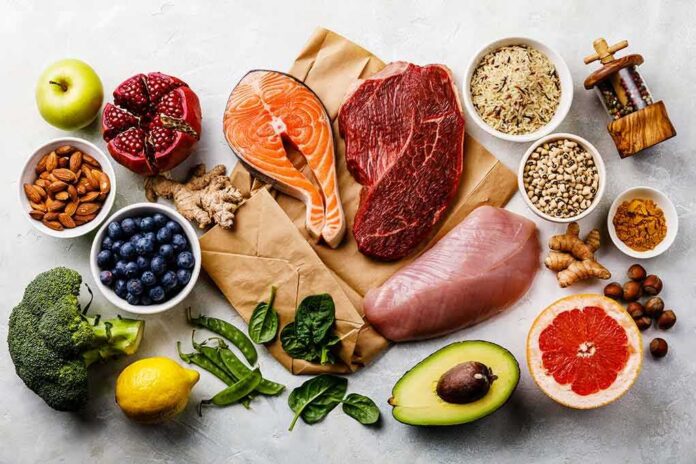
The EAT-Lancet Commission built this diet to tackle two problems at once: human health and environmental strain. Researchers including Walter Willett and Johan Rockström designed a food pattern heavy on vegetables, fruit, whole grains, nuts and legumes, with limited red meat and dairy. It is not a vegan mandate. The framework sets target ranges, leaving room for people to adjust it to their own culture and taste.
That flexibility matters because critics often picture this as an all-or-nothing vegan experiment. It isn’t. The original report treats animal-source foods as a smaller slice of the plate, not an eliminated one. That distinction gets lost fast once the diet becomes a talking point in online debates about climate policy and personal freedom.
The Health And Climate Numbers Behind The Headlines
A 2023 study tracked 57,078 adults in Singapore and found that people who followed the Planetary Health Diet more closely had a lower risk of dying from chronic disease. Their estimated greenhouse gas emissions dropped too, giving researchers real observational evidence that eating choices connect to both personal health and the planet’s carbon output.
That same research team, though, found something the diet’s promoters rarely mention. The people most closely following the plan used more water and more land than those who didn’t. One environmental box got checked. Two others didn’t. A diet billed as an all-around fix turned out to be a trade-off, not a clean sweep.
The Trade-Off Nobody Advertises
Nutrition researchers have also flagged gaps in the diet’s design. A Lancet analysis found the eating pattern could leave people short on iron, calcium and zinc, nutrients that matter most for women of childbearing age. Plant sources of these minerals are often harder for the body to absorb than animal sources, a detail easy to skip in a glossy infographic.
Children and teenagers face a similar concern. A 2024 review found the diet might not cover their energy and nutrient needs without changes, and that fortified foods and plant-based substitutes are harder to find and afford in lower-income countries. A diet that works on a spreadsheet does not automatically work on a family’s grocery budget.
Why Scientists Still Argue Over The Fine Print
A newer Lancet critique argues the diet was built first to prevent chronic disease, with environmental boundaries and cost impacts added afterward rather than baked in from the start. The same critique says some of the original models did not fully account for uncertainty, which can make the diet’s benefits look more statistically solid than they actually are.
Do you think adopting the Planetary Health Diet and taking millions of acres of pastureland out of livestock production makes sense? Some researchers do. Find out more, and discover the rest of this week's food and farming news in the #ruralupdate https://t.co/YceK0PfmN1 via…
— Andrew S (@AndrewrhShirley) November 17, 2026
None of this erases the real, measured benefits found in the mortality and emissions data. It does mean the “win-win” pitch oversells the certainty. Good policy and good personal decisions both deserve numbers that hold up under scrutiny, not just a tidy slogan stamped on a dinner plate.
What This Means If You’re Trying To Eat Better
None of this means Americans should wait for a government chart before eating more vegetables. Cutting back on red meat a few nights a week, adding beans and whole grains, and watching portion sizes are common-sense moves most nutritionists already recommend. The science supports personal choice and gradual change, not a mandated menu handed down from an international commission.
The honest takeaway is that this diet offers real upside with real limits attached. It can lower certain health risks and shrink a household’s carbon footprint, but it is not a nutritional guarantee for every person, and it is not free. Families deciding how to eat deserve the full picture, trade-offs included, before anyone calls it a universal fix.
Sources:
mindbodygreen.com, pmc.ncbi.nlm.nih.gov, foodtank.com, media.sciltp.com