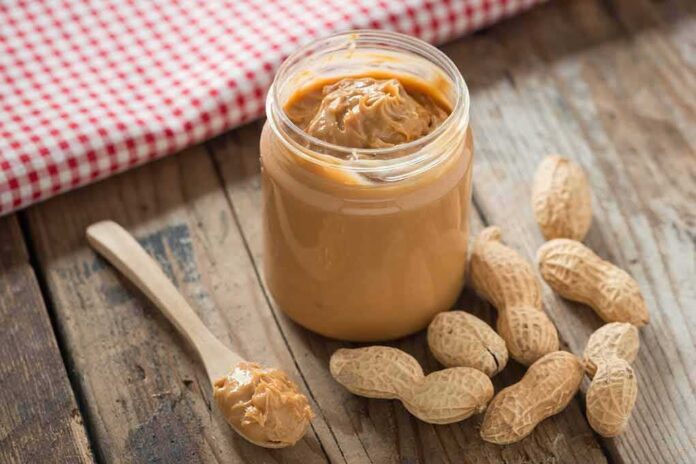
A six-month clinical trial found that eating peanuts or peanut butter every day lowered triglycerides in the blood, a key marker of heart health.
Quick Take
- A randomized trial called ARISTOTLE tested peanuts, peanut butter, and a peanut-oil control butter over six months.
- Triglycerides dropped significantly in people who ate whole peanuts or peanut butter, not the refined oil control.
- The skin-roasted-peanut group also showed better cholesterol ratios compared to the control group.
- The study only included 63 healthy young adults, so results may not apply to older people or those with heart disease.
What The Peanut Trial Actually Tested
Researchers randomly split 90 healthy adults into three groups. One group ate 25 grams of skin-roasted peanuts daily. Another ate 32 grams of peanut butter. The third ate 32 grams of a control butter made from refined peanut oil, stripped of fiber and skin compounds. Sixty-three people finished the full six months, and their blood was tested before and after.
The results showed a clear pattern. Triglycerides fell significantly in people eating whole peanuts or peanut butter, with a reported difference of −0.14 and a tight statistical range that rules out chance, carrying a p-value under 0.0001. The refined peanut-oil control group did not get the same benefit, suggesting something in the whole peanut, beyond just its fat content, drove the change.
Cholesterol Ratios Improved Too, But Only In One Group
People eating skin-roasted peanuts saw better total-cholesterol-to-HDL and LDL-to-HDL ratios than the control group, with strong statistical backing. These ratios matter because doctors use them to judge heart disease risk, often more than single cholesterol numbers alone. A separate four-week study found similar wins, with men eating about 77 grams of peanuts daily seeing their HDL, the “good” cholesterol, rise by over six points.
Why This Study Design Matters More Than It Seems
Most peanut-health headlines lean on observational data, where researchers just watch what people already eat and guess at cause and effect. This trial instead randomly assigned foods and measured outcomes directly, which is harder to dismiss. The control butter was built specifically to remove fiber and polyphenols found in peanut skins, letting researchers isolate whether those compounds, not just fat, mattered for blood lipids.
Where The Evidence Still Falls Short
The study is not without real limits. Only 63 of 90 original participants completed it, and the final groups were small, with just 19 to 23 people each. Everyone studied was young and healthy, averaging under 23 years old, so the findings don’t prove peanuts help older adults or people already on cholesterol medication. One brief but honest caveat: a separate review found no differences in total cholesterol, LDL, HDL, or triglycerides between peanut forms, meaning not every measurement lined up neatly across the board.
The Bigger Picture On Nuts And Heart Health
This peanut study fits a larger body of research on nuts generally. Broader reviews have found that eating about an ounce of tree nuts daily can modestly lower total cholesterol, LDL cholesterol, and triglycerides. None of this proves fewer heart attacks or longer lives directly, since biomarkers are not the same as hard outcomes, but the direction of the evidence keeps pointing the same way across multiple independent studies.
For everyday eaters, the practical takeaway is straightforward without needing to overstate the science. Whole peanuts and natural peanut butter, eaten in modest daily amounts, appear to support healthier blood fat levels better than refined peanut oil alone. People with peanut allergies obviously have no stake in this debate, and anyone watching added sugar, salt, or hydrogenated oils in processed peanut products should read labels carefully before assuming every jar on the shelf delivers the same benefit.
Sources:
youtube.com, public-pages-files-2025.frontiersin.org, pmc.ncbi.nlm.nih.gov, frontiersin.org, cambridge.org, medicaldialogues.in