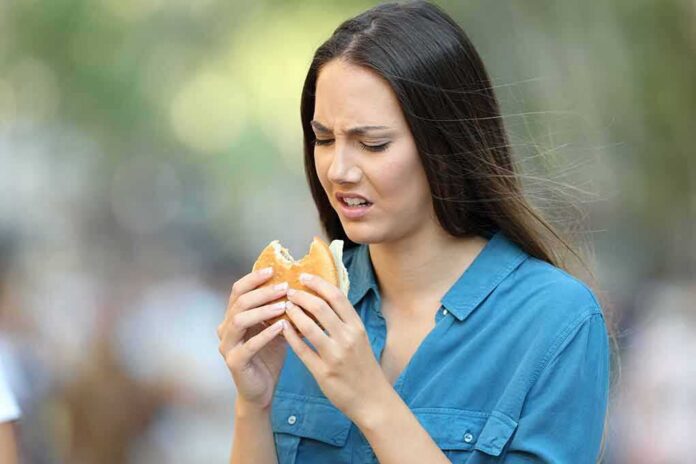
Scientists now have a molecular explanation for why some long COVID patients still cannot taste sweet, bitter, or savory food months after their infection cleared.
Quick Take
- A 2026 study found lower levels of two key taste genes in people with lasting taste loss after COVID-19
- Eleven of 28 patients studied had total loss of at least one taste quality, mostly sweet, bitter, and umami
- Taste buds stayed mostly intact, pointing to a signaling breakdown rather than destroyed cells
- A separate government-backed study found lingering virus in some patients’ tongues, offering a related piece of the puzzle
The Study That Pinpointed A Broken Signal
Researchers publishing in Chemical Senses examined 28 people who had taste problems lasting more than a year after a COVID-19 infection. None had been hospitalized. The team measured two genes, PLCβ2 and Tas1R3, and found both showed reduced activity in patients whose taste loss stuck around the longest. That gave scientists a specific molecular target instead of a vague description of “long COVID taste loss.”
Eleven of the 28 subjects had lost an entire taste quality, not just a weaker version of it. Sweet, bitter, and umami losses showed up far more often than sour or salty problems. That pattern matters because those three flavors all depend on the same signaling pathway, giving researchers a clean biological thread to follow instead of scattered, unrelated symptoms.
Why PLCβ2 Matters For Your Dinner Plate
PLCβ2 is a protein that helps taste cells pass their signal along to the brain. It also boosts the strength of sweet, bitter, and umami signals specifically. When a cell makes less of this protein, the taste message gets weaker or never arrives at all. Researchers in Sweden confirmed the pattern held up in standardized taste tests, not just in lab measurements of gene activity.
Here is the twist many assumed would not hold up: the taste buds themselves looked mostly normal. Researchers examined tissue samples and found only occasional disorganized buds, not widespread destruction. That finding rules out the simplest explanation, that the virus simply wipes out taste cells, and points instead toward a subtler signaling malfunction inside cells that are still mostly present and accounted for.
A Separate Clue About Lingering Virus
A different investigation backed by the National Institute on Aging looked at biopsies from 16 people who still could not taste six weeks after testing negative for COVID-19. Some still had viral material in their tongue and taste-bud cells up to a year and a half later. Regrown taste buds in these patients were smaller, misshapen, and had fewer receptor cells. The two findings do not confirm one caused the other, but they describe the same broken system from different angles.
How Common Is This, Really
Persistent taste loss is not the common experience most people associate with COVID-19. Early in the pandemic, roughly half of patients reported some taste or smell change. But when researchers used proper blinded taste testing instead of self-report, the real numbers dropped sharply. One review found taste dysfunction lasting beyond 12 weeks in only about 8 percent of patients. A separate one-year study found no measurable taste difference at all between people who had COVID-19 and those who had not.
Most people who lose taste after infection get it back within weeks. The patients in the new study represent a smaller, harder-hit group whose symptoms never resolved. That is exactly why isolating a specific gene pathway matters. It gives doctors a measurable target for a condition that often gets dismissed because it is rare and hard to verify in a routine exam.
What Comes Next For Patients And Doctors
The study authors were careful not to claim they found a cure. They showed a correlation between reduced gene activity and taste loss, not proof that fixing the gene restores taste. Researchers will need larger studies that track patients from the moment of infection through recovery, testing whether restoring PLCβ2 activity actually brings taste back. For now, patients living with this frustrating, invisible symptom finally have a biological explanation instead of a shrug.
Can COVID-19 leave persistent autoimmune signals? A 6-month prospective follow-up found autoantibodies in most patients studied, while emphasizing that antibody positivity alone does not establish autoimmune diseasehttps://t.co/gjBArgGOaI pic.twitter.com/GJ23hta5gR
— Fortune Journals (@fortunejournals) October 19, 2026
For the roughly one in ten long COVID patients still struggling to taste their food, that explanation is more than academic. It opens a path toward treatments aimed at the actual broken mechanism, rather than generic advice to simply wait it out.
Sources:
sciencedaily.com, unmc.edu, pmc.ncbi.nlm.nih.gov, pubmed.ncbi.nlm.nih.gov, slu.se, academic.oup.com, nia.nih.gov, mediafax.ro, onlinelibrary.wiley.com