Millions of Americans are walking around right now with a ticking health risk in their arteries, and they have no clue it’s there.
Story Snapshot
- Federal data show 59.2% of adults with high blood pressure know they have it, meaning about 4 in 10 do not.
- High blood pressure almost never causes symptoms, so many people only find out during a routine checkup or a medical emergency.
- The Centers for Disease Control and Prevention (CDC) calls checking your blood pressure the only reliable way to know your status.
- Health officials recommend home monitoring paired with regular doctor visits to close the awareness gap.
What The Numbers Actually Show
The Centers for Disease Control and Prevention (CDC) tracked adults with hypertension from August 2021 through August 2023 and found 59.2% knew their status. That leaves roughly 41% in the dark about a condition quietly straining their heart, brain, and kidneys. The gap isn’t a rounding error. It’s tens of millions of people who could be managing a serious risk but aren’t, simply because nobody told them and no symptom warned them either.
Health reporting on this topic sometimes rounds the unaware share up toward “6 in 10,” which slightly overstates the CDC’s own 41% figure. The direction of the finding is accurate. High blood pressure awareness has a real and stubborn hole in it. The exact size of that hole matters for how urgently doctors, employers, and families should push screening programs.
Why A Disease With No Warning Signs Is So Dangerous
The CDC states plainly that high blood pressure “typically has no signs or symptoms”. That’s the trap. A person can feel completely normal while their arteries take a beating for years. Public health officials have nicknamed hypertension the “silent killer” because the first real sign for many patients is a heart attack, stroke, or kidney failure, not a headache or dizziness beforehand.
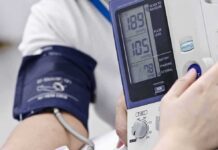
That silence is exactly why the CDC insists measurement is the only real test. Its own guidance says “measuring your blood pressure is the only way to know whether you have high blood pressure”. No home remedy, no gut feeling, and no “I feel fine” self-diagnosis substitutes for an actual cuff reading. This is a condition that punishes people for assuming they’re healthy just because nothing hurts.
The Global Pattern Backs Up The American Numbers
This isn’t a uniquely American problem. Research from sub-Saharan Africa found awareness rates as low as 27% in some populations, and broader international reviews put undiagnosed hypertension near 18% to 30% depending on the region studied. European heart guidelines flatly describe hypertension as “predominantly an asymptomatic condition” detected mainly through opportunistic screening, meaning a nurse happens to check your arm while you’re in for something else entirely. The pattern holds worldwide: no symptoms plus spotty screening equals millions living blind to their own risk.
The CDC even warns that its own official prevalence maps likely understate the true scope of the problem, because unaware patients can’t report a diagnosis they don’t have. That’s a rare admission from a federal health agency that the real number is probably worse than the official one. It should make anyone skimming past a routine physical think twice about skipping the blood pressure cuff.
What Actually Closes The Gap
The fix here isn’t complicated, which is refreshing in a health landscape full of expensive interventions. The CDC promotes self-measured blood pressure monitoring at home, paired with sharing those readings with a doctor, as a proven way to catch hypertension early. A home cuff costs less than a month of cable television and takes thirty seconds to use.
The CDC Foundation recently launched a national hypertension control program aimed squarely at this awareness gap, recognizing that early detection prevents downstream strokes and heart attacks that cost far more in suffering and money. Common sense says a five-minute check at your annual physical, or a cheap cuff on your kitchen counter, beats finding out the hard way in an emergency room. Personal responsibility starts with simply knowing the number.
Sources:
mindbodygreen.com, cdc.gov, cdcfoundation.org