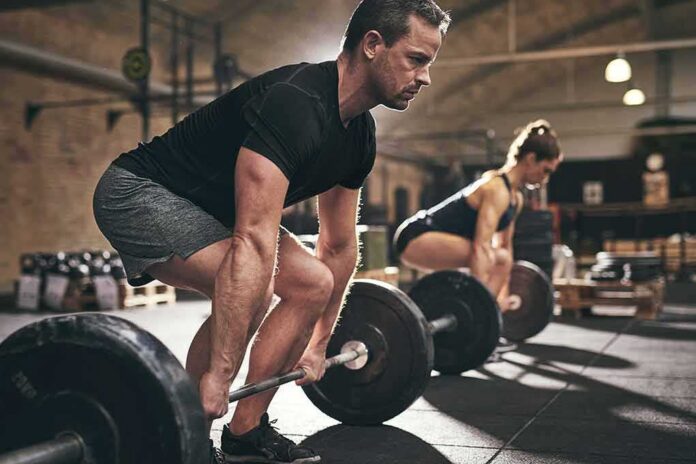
A molecule your muscles make during exercise may also explain why workouts make you stronger, and scientists just mapped out exactly how it works.
Quick Take
- A new study in Nature Communications links a molecule called L-BAIBA to stronger, more fatigue-resistant muscles in mice.
- The molecule appears to work through a specific chain of events in the body known as the PGC1α-BAIBA-PPARδ pathway.
- Only one form of the molecule, L-BAIBA, produced the benefit; its mirror-image twin, D-BAIBA, did not.
- Researchers also saw protection against muscle weakness in mice with obesity and type 2 diabetes.
- Human testing has not yet confirmed these effects, though plasma studies in people point to a real biological connection.
What The Study Actually Found
Researchers published their findings in Nature Communications on August 18, 2026, describing a molecule called beta-aminoisobutyric acid, or BAIBA, as a key player in how muscles adapt to exercise. The paper names a specific pathway, PGC1α-BAIBA-PPARδ, that appears to drive this process. Mice treated with the L-BAIBA version developed larger muscles, performed better during exercise, and resisted fatigue longer than untreated mice.
The effect was not generic. Scientists tested both forms of the molecule, L-BAIBA and D-BAIBA, which are mirror images of each other at the chemical level. Only L-BAIBA increased fatigue resistance in the soleus muscle, a key muscle used for standing and walking. D-BAIBA showed no such benefit, tying the result to mitochondrial activity, the energy-producing part of muscle cells.
Why This Matters Beyond The Gym
The research team, based out of the University of Leeds, didn’t stop at performance. They also tested L-BAIBA in mice with obesity and type 2 diabetes, conditions known to weaken muscle over time. The molecule appeared to protect against that muscle damage and dysfunction, suggesting a possible path toward treatments for diabetes-related muscle decline. Diabetes UK and the Biotechnology and Biological Sciences Research Council helped fund the work.
Scientists didn’t rely only on mice. They also analyzed human blood plasma and found patterns consistent with the mouse data, reinforcing that BAIBA likely plays a real role in human muscle biology, not just a laboratory curiosity. That combination of animal experiments and human plasma analysis gives the findings more weight than a single mouse study would carry on its own.
The Gap Between Mice And Men
None of this means a BAIBA pill is coming to pharmacy shelves soon. The strength and endurance gains were documented in mice, not in a human clinical trial. Broader scientific reviews of BAIBA describe it mostly as an exercise-linked biomarker in humans, with its role as an active muscle-builder still resting mainly on animal and cell research. That’s not a knock on the Leeds team’s work. It’s simply where the science currently stands.
An earlier 2025 study adds a wrinkle worth knowing. It found that voluntary wheel running alone improved fatigue resistance in a different muscle, the EDL, but adding L-BAIBA to that running didn’t boost it further. That doesn’t undercut the new findings, since different muscles and protocols were tested, but it shows BAIBA’s effects likely depend on context, muscle type, and how it’s delivered.
Separating The Science From The Hype
Headlines calling this a step toward “strengthening muscles without exercise” capture attention, but they run ahead of the data. What researchers actually showed is a believable, well-mapped biological mechanism in mice, backed by supporting human plasma evidence. That’s a meaningful scientific advance. It’s also a long way from a proven human treatment, and readers should treat the diabetes and muscle-enhancement angles as promising leads rather than settled medicine.
For readers tracking the next chapter, the real test will be human clinical trials measuring strength and fatigue resistance directly, with proper dosing, blinding, and diabetes-specific outcomes. Until those exist, this remains one of the more compelling mouse studies in exercise science this year, built on a pathway with enough mechanistic logic to justify serious follow-up research.
Find your daily dose of hope in positive news 😊
• Researchers found that L-BAIBA, a molecule released during physical activity, boosts muscle strength, endurance, and fatigue resistance.
• The compound helps protect muscle tissue from weakness and metabolic damage associated…
— Tennistonic (@tennistonic) November 27, 2026
Science built on sound mechanisms and real human correlations, rather than hype alone, deserves attention without exaggeration. This study earns that attention on its own merits.
Sources:
sciencedaily.com, nature.com, leeds.ac.uk, genengnews.com, pmc.ncbi.nlm.nih.gov