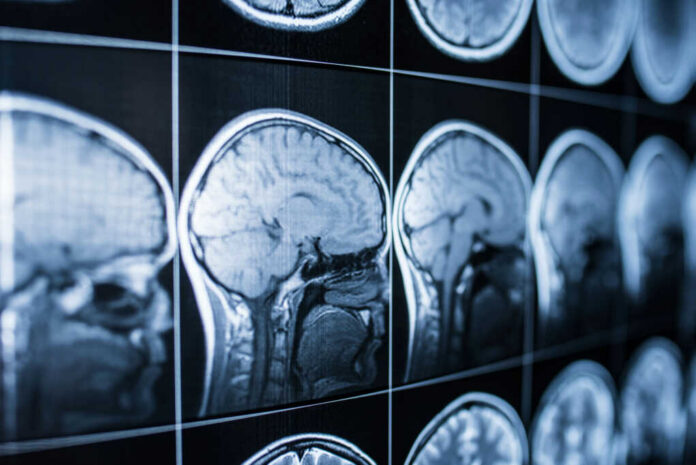
Brain scans of people who consider themselves moderate drinkers are revealing something the alcohol industry has spent decades hoping you would never see.
Quick Take
- MRI studies show measurable grey matter shrinkage in people drinking as few as 7 to 14 units of alcohol per week — well within what most people call “moderate.”
- Reduced brain blood flow shows up even at low drinking levels, and lower blood flow is a recognized early marker of cognitive decline.
- The brain changes are not limited to one region — multiple areas show reduced cortical thickness, lower grey matter volume, and altered connectivity.
- Older research showing some protective vascular effects from moderate drinking does not cancel out the structural damage picture — the two findings describe different things happening in the same brain.
What “Moderate” Actually Looks Like Inside Your Skull
Most people who describe themselves as moderate drinkers picture a glass of wine with dinner, maybe two on a Friday night. That works out to roughly 7 to 14 units per week — the exact range where a large population-based neuroimaging study found detectable reductions in total grey matter volume. [1] Grey matter is where your neurons live. Less of it is not a neutral finding. It is the kind of finding that, in other contexts, would send people straight to their doctor.
The same study, published in 2022 and drawing on a broad mid- to late-life cohort, also found lower fractional anisotropy — a measure of white matter tract integrity — and altered functional connectivity across the brain. [1] These are not subtle statistical blips. They are structural and functional differences visible on a scanner, associated with a drinking pattern millions of Americans consider entirely unremarkable.
Brain Blood Flow Is the Number You Should Be Watching
Reduced brain blood flow is one of the earliest detectable signs that the brain is under stress, and it precedes more obvious cognitive symptoms by years. Magnetic resonance imaging-based research found a direct correlation between higher alcohol intake and lower cerebral blood flow, and critically, this relationship held even at low levels of consumption. [6] Researchers also observed reductions in cortical thickness and perfusion across multiple brain regions, at intake levels below what current guidelines define as harmful. [5] That last detail deserves to sit with you for a moment.
The “But Red Wine Is Good for You” Defense Is Running Out of Road
Older research did complicate the picture in ways that gave moderate drinkers something to point to. One study reported a U-shaped relationship for white matter abnormalities and a lower prevalence of infarcts among moderate drinkers, suggesting that not every magnetic resonance imaging marker moved in a uniformly negative direction. [2] A separate analysis raised the possibility that cardiovascular benefits from moderate alcohol might partially offset age-related brain volume decline. [7] These findings are real, and they deserve honest acknowledgment rather than dismissal.
The problem is that “fewer white matter lesions” and “shrinking grey matter with reduced blood flow” are not competing descriptions of the same outcome — they are describing different biological processes happening simultaneously. Moderate alcohol consumption in older adults has been associated with reduced total brain volume, increased ventricle size, grey matter atrophy, and reduced white matter integrity. [3] The vascular argument was always the strongest card in the moderate-drinking deck, and even that card is increasingly getting beaten by the structural evidence.
Why This Research Matters More After 40
Brain volume naturally declines with age. The question is how fast and how much you accelerate that process. For someone in their forties or fifties, adding alcohol-related grey matter reduction on top of normal aging is not a neutral act — it is compounding a process already in motion. Magnetic resonance imaging studies consistently show that differences in brain structure from alcohol are not confined to heavy drinkers. [4] The threshold where measurable changes appear is far lower than the cultural definition of a problem drinker, and that gap between perception and biology is exactly where the real risk hides.
The Honest Takeaway From the Scans
The research does not say one drink will destroy your brain. What it does say, with growing consistency across multiple independent studies using actual brain imaging, is that the amount of alcohol widely considered safe is associated with structural brain changes that no one would voluntarily choose if they could see them on a screen. The science here is not alarmist advocacy — it is repeated, peer-reviewed observation. Whether that changes your Friday night is your call. But calling it “moderate” does not change what the scanner sees.
Sources:
[1] Web – Researchers Scanned The Brains Of “Moderate” Drinkers — Here’s What …
[2] Web – Alcohol consumption and MRI markers of brain structure and function
[3] Web – Alcohol Consumption and Subclinical Findings on Magnetic …
[4] Web – Moderate alcohol consumption as risk factor for adverse brain … – …
[5] Web – Even low-level drinking is bad for long-term brain health, MRI shows
[6] Web – Brain health: Even a little alcohol impairs brain blood flow
[7] Web – Association of Alcohol Consumption with Brain Volume in the … – PMC