Every few slices of bacon or hot dog you eat may not doom you to cancer, but it does quietly nudge your odds of colorectal cancer upward over decades of regular consumption.
Quick Take
- Processed meat, including bacon, ham, sausage, and deli meats, is classified as a Group 1 carcinogen by the International Agency for Research on Cancer, meaning there is sufficient evidence that it causes colorectal cancer.
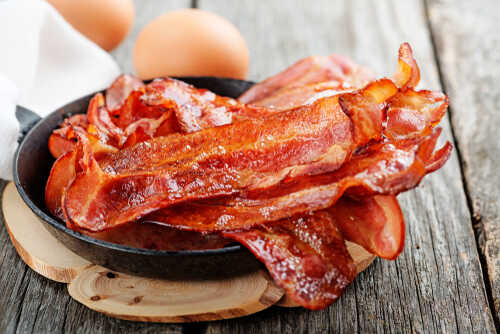
- Each 50 gram daily portion of processed meat—about two strips of bacon—raises the relative risk of colorectal cancer by roughly 18% in long-term studies.
- Although the individual risk increase is small, global estimates suggest about 34,000 cancer deaths worldwide each year are linked to diets high in processed meat.
- Red meat is classified as “probably carcinogenic,” and limiting intake to no more than three or four servings per week is widely recommended to reduce cancer risk.
- The debate is less about whether processed meat carries any risk and more about how much that risk matters in the context of a lifetime of other lifestyle choices.
What the Science Actually Says
When the International Agency for Research on Cancer evaluated the evidence in 2015, it concluded that eating processed meat causes colorectal cancer and placed it in Group 1, the same category as tobacco smoke and asbestos, though not at the same level of danger.[2][4] The agency based this on dozens of epidemiological studies showing that people who regularly eat processed meats have higher rates of colorectal cancer than those who eat little or none.[4][6] Red meat, by contrast, was classified as Group 2A, meaning it is probably carcinogenic, with weaker but still meaningful evidence.[2][6]
A large analysis of data from 10 studies estimated that consuming 50 grams of processed meat each day—about two slices of bacon or two and a quarter slices of bologna—increases the relative risk of colorectal cancer by about 18%.[2][3][5] That same review suggested that 100 grams of red meat per day could raise the risk by roughly 17% if the association were proven causal.[2] These percentages sound alarming, but they describe relative risk increases, not absolute probabilities, and the baseline lifetime risk of colorectal cancer is already around 4–5% for many populations.[3][7]
How Dangerous Is It for You?
For an individual, the World Health Organization emphasizes that the risk of developing colorectal cancer from eating processed meat remains small, even though the evidence for a causal link is strong.[2][5] The agency notes that the risk rises with the amount consumed, so occasional indulgences carry far less weight than daily bacon sandwiches or sausage-heavy diets.[2][3] In practical terms, this means that while a lifelong habit of eating large amounts of processed meat matters, the occasional hot dog at a ball game is unlikely to be decisive for most people.[3][7]
Experts estimate that diets high in processed meat are responsible for approximately 34,000 cancer deaths worldwide each year, a figure that reflects the cumulative impact across large populations rather than a high probability for any single person.[2][5] If the observed associations for red meat were proven causal, the same models suggest an additional 50,000 cancer deaths annually, underscoring why organizations like the American Institute for Cancer Research and the American Cancer Society recommend limiting both processed and red meat.[2][5]
Why Processed Meat Is Different
Processing methods such as curing, smoking, salting, and fermentation create or concentrate chemicals linked to cancer, including N‑nitroso compounds and polycyclic aromatic hydrocarbons.[6][8] These compounds can damage DNA in the cells lining the colon and rectum over time, which helps explain why processed meats show a stronger association with colorectal cancer than unprocessed red meat.[1][6] Some newer research also suggests that meats preserved with sodium nitrite carry a particularly clear link to colorectal cancer, even though not every type of processed meat has been studied equally.[8][10]
Meta‑analyses of long-term cohort studies consistently show that people who eat the most processed meat have about a 20–50% higher risk of colorectal cancer compared with those who eat little or none.[1][7] The risk per gram of processed meat is also higher than for fresh red meat, reinforcing the idea that how meat is prepared and preserved matters as much as the meat itself.[7][8] That does not mean every processed meat is equally problematic, but it does justify treating bacon, sausages, and deli meats as a class of foods to be used sparingly.
Putting Risk into Perspective
The Group 1 classification often surprises people because it groups processed meat with tobacco and asbestos, even though the absolute risk is nowhere near comparable.[2][6] Tobacco smoking, for example, multiplies cancer risk by many times, while the added risk from 50 grams of processed meat per day is a modest relative increase that accumulates slowly over years.[2][5] Public health experts stress that the message is not to panic but to recognize that processed meat is one of many modifiable risk factors, alongside smoking, alcohol, obesity, and inactivity.[2][5]
Given the evidence, major cancer organizations recommend practical steps: avoiding processed meat whenever possible, limiting unprocessed red meat to about 18 ounces per week, and emphasizing plant‑based proteins, whole grains, and vegetables.[1][2][5] These changes are not about eliminating every risk but about shifting the odds in your favor over decades, much like wearing sunscreen, quitting smoking, or staying physically active.[1][5] For many adults, the most realistic goal is to treat processed meats as occasional treats rather than daily staples.
Understanding the size of the cancer risk from processed meat requires distinguishing between hazard and magnitude. The scientific consensus is that processed meat is a genuine carcinogen for colorectal cancer, but the practical impact on any one person depends on how much, how often, and over how many years it is consumed.[2][4][7] That nuance is easily lost in headlines, yet it is exactly where individual choices can make a measurable difference without turning every meal into a health crisis.[3][5]
Nutrition Science and the “Small but Real” Dilemma
The processed meat debate fits a familiar pattern in nutrition science: a substance is shown to pose a small but real risk, and the public then argues whether that risk justifies changing habits.[3][5] Similar tensions have played out around low‑dose alcohol, acrylamide in starchy foods, and even hot beverages, where the real question is not whether something can cause cancer but how much it matters in the context of other lifestyle factors.[3][5] In that light, the IARC classification is best read as a hazard signal rather than a verdict of inevitable harm.[2][7]
Because the International Agency for Research on Cancer does not define a safe threshold for processed meat, guidelines focus on moderation and substitution rather than an exact cutoff.[2][3] The absence of a precise “safe” number of bacon strips per week frustrates some consumers, but it reflects genuine uncertainty about how risk curves behave at very low intake levels.[3][5] Until more granular data emerge, the most evidence‑based approach is to minimize processed meat and keep red meat within recommended limits, especially for people who already face other colorectal cancer risk factors.[1][2][5]
For adults over 40, the takeaway is straightforward: processed meat is not a dietary emergency, but it is also not a health food. Long‑term exposure to bacon, sausage, and other cured meats nudges colorectal cancer risk upward in a way that is small for individuals but meaningful at the population level.[2][5][7] By treating processed meat as an occasional pleasure rather than a daily staple and by building a plate around vegetables, whole grains, and legumes, most people can reduce one preventable risk without sacrificing enjoyment or cultural traditions at the table.[1][2][5]
Sources:
[1] Web – How Big Is the Cancer Risk from Processed Meat?
[2] Web – International Agency for Research on Cancer
[3] Web – Carcinogenicity of the consumption of red meat and processed meat
[4] Web – Does Red Meat Cause Cancer? – Cleveland Clinic Health Essentials
[5] Web – [PDF] IARC Monographs evaluate consumption of red meat and …
[6] Web – Red Meat and Processed Meat Consumption
[7] Web – Red Meat and Processed Meat – IARC Publications
[8] Web – Risk Assessment and Processed Meats – Center for a Livable Future
[10] Web – Processing Information About Processed Meat – McGill University