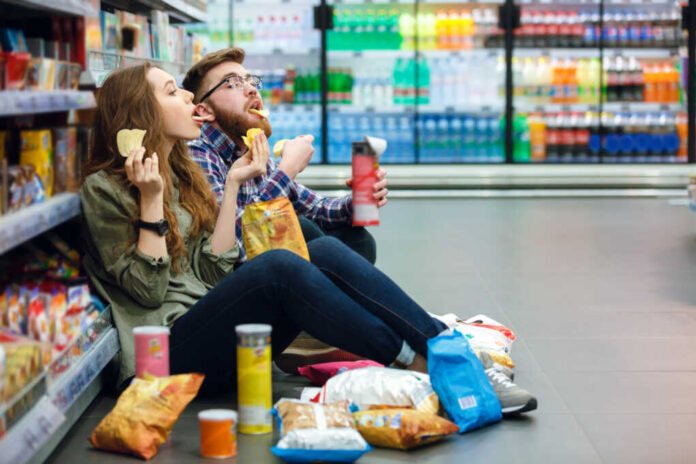
Scientists now argue that your favorite snack foods trigger the same brain response as a pack of cigarettes, and they have decades of buried tobacco company documents to prove it.
Story Snapshot
- Ultra-processed foods meet the same addiction criteria established for tobacco in 1988, triggering 150-200% dopamine surges comparable to nicotine.
- Tobacco giants like Philip Morris and R.J. Reynolds owned major food brands in the 1980s-2000s, transferring nicotine research to engineer hyper-palatable foods.
- A February 2026 paper from University of Michigan, Harvard, and Duke researchers proposes applying anti-tobacco regulations to Big Food.
- Weight-loss drugs like GLP-1 medications reduce cravings for ultra-processed foods, tobacco, and alcohol, inadvertently validating the addiction model.
When Big Tobacco Bought Your Breakfast Cereal
The story begins in the 1980s when tobacco executives faced mounting regulatory pressure and declining cigarette sales. Philip Morris acquired Kraft and General Foods. R.J. Reynolds bought Nabisco. These weren’t desperate diversification plays. Internal documents later revealed something far more calculated: tobacco companies transferred their nicotine addiction research directly into food product development. The same scientists who perfected cigarette delivery systems began engineering the precise salt-sugar-fat combinations that would dominate grocery store shelves for the next four decades.
The Brain Chemistry Connection Nobody Discussed
Ashley Gearhardt, a University of Michigan psychology professor, spent years analyzing how ultra-processed foods affect brain chemistry. Her findings are stark. These foods trigger dopamine releases in the striatum measuring 150-200% above baseline, matching nicotine’s neurological impact almost precisely. The 1988 Surgeon General report established specific criteria for classifying substances as addictive. Gearhardt’s 2022 research demonstrated that ultra-processed foods meet every single criterion. Her February 2026 paper in The Milbank Quarterly, co-authored with Harvard and Duke researchers, documents how tobacco companies deliberately engineered foods for “stimulation without satisfaction,” creating products designed to leave consumers wanting more.
https://youtu.be/XRtvvp3R8KQ?si=-BotLSQVMypt03fo
The Legacy Products Still on Shelves
Tobacco companies eventually divested from food brands in the 2000s under regulatory pressure, but their formulation blueprints remained. Research shows products from the tobacco-food merger era contain 29% higher fat-sodium combinations and 80% more carbohydrate-sodium pairings compared to earlier versions. Walk down any grocery aisle today and you’re surrounded by foods engineered using research originally intended to keep smokers addicted. The Oreos, Chips Ahoy, and Ritz crackers descending from R.J. Reynolds ownership still use flavor profiles developed with tobacco addiction expertise. Philip Morris techniques for low-nicotine extraction found their way into coffee products, proving the knowledge transfer went both directions.
The Unexpected Evidence from Weight Loss Drugs
Diana Winters, a UCLA food and health law researcher, identified an unexpected validation of the addiction model. Patients taking GLP-1 medications for weight loss reported something curious beyond appetite suppression. They lost interest in ultra-processed foods, but also in cigarettes and alcohol. The drugs weren’t targeting specific substances but rather the underlying reward pathways. This cross-substance effect suggests ultra-processed foods, tobacco, and alcohol operate through similar neurological mechanisms. Laura Schmidt from UC San Francisco predicts formal recognition of ultra-processed food addiction will revolutionize addiction science, forcing researchers to reconsider how engineered products hijack ancient survival systems designed to seek calorie-dense foods in environments of scarcity.
https://youtu.be/cmylwEMb00Q?si=nwmoEmcemTSAVEdE
What Anti-Tobacco Playbook Means for Your Grocery Store
The policy proposals mirror tobacco control strategies that cut smoking rates dramatically over three decades. Researchers advocate for marketing restrictions, especially targeting children in schools and hospitals. They want reformulation requirements to reduce addictive combinations. Warning labels could appear on packaging. The economic implications are substantial. Food companies would face reformulation costs and potential sales declines. Lower-income communities with high ultra-processed food access could benefit most from interventions, though concerns exist about affordability if healthier alternatives cost more. The conservative committees at WHO and the American Psychiatric Association haven’t formally recognized ultra-processed food addiction as a diagnosis, blocking insurance coverage for treatment and limiting regulatory momentum.
The Personal Responsibility Question That Won’t Disappear
This debate forces confrontation with uncomfortable questions about free will and corporate accountability. Americans value personal responsibility. We resist nanny-state interventions that restrict choice. The tobacco precedent offers guidance. Society concluded that when corporations deliberately engineer products to create dependency, especially targeting children, regulatory intervention serves the common good. The food industry argument about essential nutrition collapses when examining products with minimal nutritional value engineered primarily for repeat purchase behavior. Gearhardt emphasizes shifting focus from individual blame to corporate accountability. The science suggests many people aren’t failing at willpower but rather fighting sophisticated neurological manipulation developed using decades of addiction research. That doesn’t eliminate personal responsibility, but it changes the calculation about appropriate corporate behavior and government oversight.
Sources:
The push to turn Big Food into the new Big Tobacco – STAT News
Scientists Found a Strange Link Between Junk Food and Cigarettes – Vice
The Milbank Quarterly – Ultra-Processed Food Addiction Research