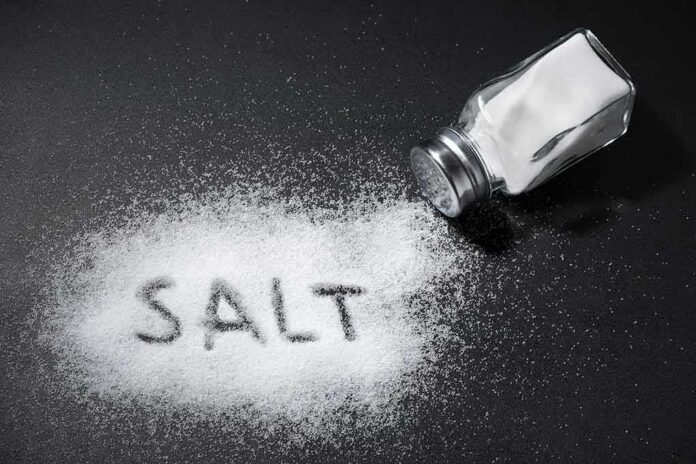
The salt shaker is not a harmless habit if the new liver data hold up. The strongest studies now link frequent table salting with a higher risk of fatty liver disease, cirrhosis, and liver cancer, but the story is more precise than the headline.
Quick Take
- People who always added salt to food had a higher risk of metabolic dysfunction-associated steatotic liver disease than people who rarely did so.
- The same pattern also showed up for cirrhosis and liver cancer in the main cohort study.
- Genetic analysis backed the idea that adding salt to food may play a causal role in liver disease.
- The evidence is still about adding salt to food, not the salt shaker alone, so the claim is broader than the tool on the table.
What the best study found
The clearest evidence comes from a large prospective study that followed adults over time and compared people by how often they added salt to foods. Those who always added salt had a hazard ratio of 1.40 for metabolic dysfunction-associated steatotic liver disease, with a strong trend across the groups. Another report on the same research said the always-salt group also had a 32 percent higher risk of cirrhosis and more than double the risk of liver cancer.
That matters because this was not just a one-off statistical blip. The study found a dose pattern: the more often people added salt, the higher their liver risk. It also reported that the link was stronger in people with normal body weight, people who drank alcohol, and people with certain inherited traits. That is the kind of detail that makes a nutrition story stick, because it says the risk does not fall evenly on everyone.
Why the case looks stronger than a simple coincidence
A separate genetic analysis pushed the argument further. It found that salt added to food was associated with higher odds of metabolic dysfunction-associated steatotic liver disease across three data sets, and the reverse analysis did not show the disease causing salt use. In plain English, the direction ran from salt behavior toward liver disease, not the other way around. That does not prove every table salt habit is dangerous, but it does make the claim harder to dismiss as random noise.
A meta-analysis also found a pooled odds ratio of 1.60 for nonalcoholic fatty liver disease when high sodium intake was compared with low intake. That sounds decisive until you look at the fine print. The same analysis showed very high heterogeneity, which means the studies did not line up cleanly. So the broad pattern leans in one direction, but the exact size of the risk still shifts depending on the study, the population, and how sodium was measured.
What the critics can fairly say
The biggest weakness is simple. The research tracks how often people added salt to food. It does not measure salt shaker use in grams per meal. That matters because “always adds salt” is a behavior label, not a direct sodium tally. A person could add from a shaker, a cellar, or a pinch from a dish, and the studies do not fully split those apart. So the headlines outrun the method if they claim the shaker alone is guilty.
There is also a counter-signal that keeps the debate honest. One study in people with existing nonalcoholic fatty liver disease found higher sodium intake linked with lower all-cause mortality. That does not erase the liver disease findings, but it does warn against lazy thinking. Nutrition data often show different answers depending on outcome, dose, and the health of the people being studied. That is why the best reading is not “salt is evil,” but “salt deserves closer scrutiny than many people assumed.”
The practical takeaway is narrower than the alarmist version. The evidence supports cutting back on added salt, especially if you already carry liver risk factors. It does not yet prove that the salt shaker itself, standing alone on the table, is the whole cause. The real issue is likely the habit it represents: extra sodium, repeated often, layered on top of an already salty diet.
Sources:
docs.google.com, theeducatedpatient.com, pubmed.ncbi.nlm.nih.gov, pmc.ncbi.nlm.nih.gov, medicalnewstoday.com