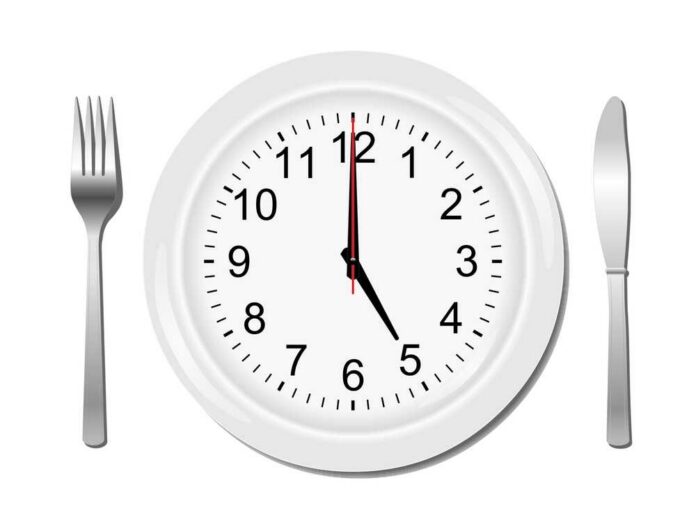
Eating dinner at 5 P.M. burns 60 more calories than at 9 P.M., challenging everything you thought about weight loss.
Story Snapshot
- Overweight people eating early dinner torched extra resting calories and curbed hunger hormones.
- Last meal between 5-7 P.M. stabilizes blood sugar, cuts diabetes risk, and aligns with body clocks.
- Early time-restricted eating outperforms late versions for weight loss and blood pressure control.
- No single new study; consensus from 2021-2023 trials debunks late-night eating myths.
Chrononutrition Roots in Circadian Science
Satchin Panda’s Salk Institute lab pioneered chrononutrition in the 2010s. Researchers proved meal timing affects metabolism more than food choice. Circadian rhythms, honored by the 2017 Nobel Prize, peak metabolism early in the day. Late dinners spike ghrelin, the hunger hormone, and impair fat burning. Modern schedules clash with this biology, fueling obesity epidemics among shift workers and late eaters.
Key Studies Pinpoint 5 P.M. Optimum
The 2022 Cell Metabolism trial tested overweight adults. Those eating dinner at 5 P.M. burned about 60 more resting calories than 9 P.M. eaters. Ghrelin levels stayed lower, reducing hunger. A 2021 Nutrients study confirmed 6 P.M. dinners stabilize blood glucose. These cut heart disease and diabetes risks while boosting overall metabolism. Early eating preserves overnight fasting periods essential for repair.
A 2023 BMJ meta-analysis reviewed 41 trials. Early time-restricted eating beat late versions on weight loss, insulin sensitivity, and blood pressure. Northwestern’s 2023 study equated 8-hour eating windows to calorie counting. No magic bullet exists; results target overweight and diabetes-prone groups. Broader trials remain needed for universal proof.
Watch:
Stakeholders Drive Practical Adoption
Researchers from Cell Metabolism and Nutrients lead chrononutrition advances. NIH-funded universities like Northwestern Feinberg shape guidelines. Clinicians Dana Ellis Hunnes of UCLA and Samantha Cochrane of Ohio State translate findings. Hunnes advises dinners 2-3 hours before bed with flexibility. Cochrane stresses smaller late portions to dodge reflux. Media like Outside Online popularizes tips but risks hype.
These experts prioritize circadian alignment over rigidity. Common sense aligns: American conservative values favor self-reliant health tweaks over fad diets. Facts support gradual shifts, like advancing dinner by one hour weekly, for sustainable gains without lifestyle upheaval.
Impacts Reshape Daily Habits
Short-term shifts to 7 P.M. cutoffs ease reflux, hunger, and improve sleep. Shift workers benefit from protein-fiber-fat snacks. Long-term, aligned eating prevents obesity and type 2 diabetes. It challenges calories-in-calories-out dogma, equating TRE to dieting. Healthcare savings follow from fewer chronic cases. Nutrition shifts to “when” over “what,” boosting 16:8 intermittent fasting apps and books.
Socially, earlier dinners curb late snacking culture. Overweight individuals gain most, burning extra calories effortlessly. Experts like Hunnes note light snacks suit imperfect schedules. BMJ analysts affirm early windows lower blood pressure reliably. Consensus holds: practicality trumps perfection in metabolic health.
Sources:
https://www.outsideonline.com/health/nutrition/best-time-to-eat-dinner/
https://www.mindbodygreen.com/articles/why-when-you-eat-matters-as-much-as-what-you-eat
https://www.nm.org/healthbeat/healthy-tips/nutrition/best-times-to-eat
https://joycerey.com/blog/the-optimum-time-to