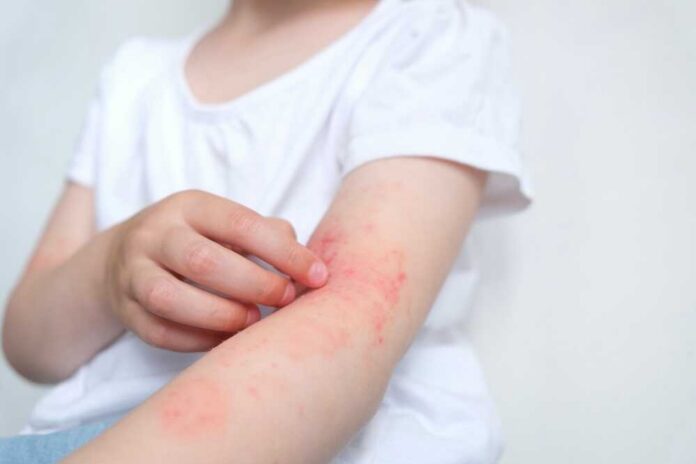
The real question is not “Can my child get a food allergy test?” but “Will a test actually make my child safer—or just make our life harder?”
Story Snapshot
- Most children with food reactions do not need giant “allergy panels,” but some absolutely need targeted testing to stay alive.
- Doctors diagnose food allergy by combining your child’s story with tests, not by treating any single lab result as gospel.
- Blood and skin tests can mislead families into years of unnecessary food bans if used as routine screening.
- The most accurate test—an oral food challenge—is also the most nerve‑racking, which is why it must be done by specialists.
Parents fear food, but the body’s story comes first
Parents usually think about testing after a scary meal: the baby eats scrambled egg, and minutes later breaks out in hives, vomits, or wheezes. That kind of immediate, reproducible reaction is the starting line for a real food allergy workup, not a reason to order twenty random lab tests. Specialist guidance is blunt: there is no precise “right age” to test; the right moment is when a child first clearly reacts to a specific food, and your doctor needs to confirm what happened.[3][6][8]
Many children, on the other hand, have vague problems—chronic stomachaches, mild eczema, a runny nose at daycare—and end up funneled toward broad “food panels.” That approach collides with the way IgE blood tests work: they measure sensitization, not whether a child actually reacts when they eat the food.[5][6] Used without a clear reaction story, these tests light up like a Christmas tree, labeling kids “allergic” to foods they have always tolerated, and pushing families into costly, joyless diets with no real medical benefit.[5][6][8]
What real food allergy testing looks like
When a child truly may have a food allergy, the evaluation follows a disciplined sequence, not a fishing expedition. A good clinician starts with a detailed history and physical exam, focusing on timing, symptoms, amounts eaten, and previous exposures.[6] If the pattern suggests an IgE‑mediated allergy—rapid hives, swelling, trouble breathing, vomiting—targeted skin prick tests or blood tests to that specific food can be ordered, not shotgun panels. These tests help estimate risk, but everyone in the room should know they are imperfect tools, not verdicts.[5][6][7]
Skin prick testing places small drops of individual food extracts on the child’s back or forearm, then gently scratches the top skin layer so the immune cells can “see” the allergen.[7] Results show up within about fifteen minutes as small itchy bumps if antibodies are present, and an allergist interprets those bumps in context, not in isolation.[7] Blood tests measure food‑specific immunoglobulin E antibodies and are useful when skin testing is not possible—severe eczema, certain medicines—or when doctors track whether a known allergy is fading.[5][7] Both tests, alone, are notorious for false positives if used as casual screening.[5][6][8]
The gold standard that terrifies parents—and why it matters
When history and preliminary tests do not line up, or when a family hopes a child has outgrown an allergy, specialists turn to the exam that quietly rules them all: the supervised oral food challenge.[2][3][7] In this test, a child eats tiny, carefully measured doses of the suspect food in a medical setting while staff watch closely for several hours.[2][3][7] Doses increase stepwise until the child either reacts and is treated on the spot, or finishes a full serving without trouble, proving they are not clinically allergic.
Major pediatric centers call oral food challenge the most accurate test for confirming or excluding a food allergy.[2][3][7] It is resource‑intensive and emotionally stressful, which is why serious programs reserve it for children whose story and prior testing leave real doubt, or when the potential payoff—freedom from unnecessary lifelong avoidance—is huge.[2][3][7]
Why routine screening backfires
Some national organizations have had to say the quiet part out loud: the standard of care is not to screen young children with big allergy panels “just in case.”[5][8] They warn that panel testing produces many false positives, provoking anxiety, social restriction, and rising healthcare costs with little gain in safety.[5][6][8]
At the same time, serious guidelines do not trivialize real food allergy. They endorse early introduction of foods like peanut and egg for most infants without prior screening, precisely because avoiding those foods “just in case” can make true allergy more likely later.[4][5][8] They also endorse aggressive evaluation when a child has had a convincing reaction to a common trigger like peanut, milk, or egg.[5][6] That is the nuance often lost in social media soundbites: not “never test,” but “test with a reason.”
How to decide if your child should be tested
Parents staring at a rash after dinner want a simple rule, and there is one that holds up well. If your child has immediate, reproducible reactions—hives, lip or face swelling, vomiting, wheezing, or collapse—within minutes to two hours after eating a specific food, talk to your pediatrician about targeted testing or referral to a pediatric allergist.[5][6][9] If your child just has vague chronic issues, press for a careful history and other explanations before anyone orders a broad food panel.[5][6]
Food allergy testing should answer a clear yes‑or‑no question that will change what your child eats or carries in their backpack. When testing is anchored to a real story and interpreted by someone who understands its limits, it can prevent life‑threatening reactions and free families from unnecessary fear. When it is used as a shortcut for uncertainty, it mostly buys confusion. The smart move is not more testing, but better‑aimed testing, at the right time, for the right child.
Sources:
[2] Web – SECTION 14.1. Allergy services – Oklahoma.gov
[3] Web – Food Allergy: Oral Food Challenge – Nationwide Children’s Hospital
[4] Web – Is it true children younger than 3 shouldn’t be tested for food …
[5] Web – Food Allergy Testing & Treatment | OAAC
[6] Web – Allergy testing prior to peanut introduction in children
[7] Web – [PDF] Allergen Testing – BCBSOK.com
[8] Web – Food Allergy Profile – Diagnostic Laboratory of Oklahoma
[9] Web – Okla. Admin. Code § 317:30-5-14.1 – Allergy services