Surgeons can cut away more than half of a patient’s liver and watch it grow back to nearly full size within weeks, and Mayo Clinic researchers just found one reason why that sometimes fails to happen.
Story Snapshot
- Mayo Clinic surgeon Dr. Patrick Starlinger identified blood coagulation as a key driver of liver regrowth after surgery.
- Researchers compared tissue from healthy livers and damaged livers to map how regeneration actually works in humans.
- Not every patient regrows enough liver function, and that failure can turn deadly after surgery.
- A related Mayo-led trial found a common clotting drug cut the risk of liver failure after surgery by roughly three times.
What Mayo Clinic Found About Liver Regrowth
The liver stands apart from almost every other organ in the human body. Doctors can remove a large section to treat cancer or disease, and the remaining tissue can rebuild itself back to near-normal size. Dr. Patrick Starlinger, a hepatobiliary and pancreas surgeon at Mayo Clinic Comprehensive Cancer Center, says his team wanted to understand the actual biology behind that process rather than just observe the result on a scan.
Starlinger’s team studied liver samples from patients with healthy livers and compared them to samples from patients whose livers were damaged or diseased before surgery. That side-by-side comparison let researchers trace which biological systems switch on when regeneration succeeds, and which ones stall when it does not. The work points to blood coagulation as a central player, not just a bystander in the healing process.
Why Clotting Cells Matter More Than Doctors Realized
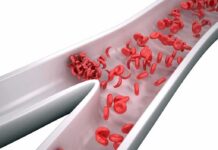
“We were able to discover that the blood coagulation system is crucially important to allow these mechanisms of liver regeneration to actually occur,” Starlinger said. That finding builds on earlier research showing a direct link between the body’s clotting machinery and the signals that tell liver cells to start dividing and rebuilding lost tissue. For decades, doctors treated clotting mainly as a bleeding-control issue during surgery, not a repair signal.
This shift matters because surgeons already walk a tightrope when planning liver operations. They calculate how much liver tissue, called the future liver remnant, a patient needs left behind to survive and recover. Research shows that patients typically need to keep at least 30 to 40 percent of their functioning liver volume intact to avoid serious complications after major resection. Get that math wrong, and regeneration alone cannot save the patient.
When Regeneration Fails And Patients Face Danger
Not every liver bounces back the way doctors hope. A separate Mayo Clinic study tracked blood and tissue samples from more than 150 patients undergoing liver resection and sorted them by whether their regeneration worked normally or failed afterward. Failed regrowth after surgery is known as post-hepatectomy liver failure, and it carries a mortality rate that can reach 50 percent in serious cases.
That stark risk is why Starlinger’s coagulation research carries real weight beyond the lab. If clotting biology steers regeneration, then drugs that affect clotting might also steer outcomes for patients facing liver surgery. Mayo researchers followed that logic directly into a clinical trial, testing whether a cheap, widely available medication could tip the odds in the patient’s favor.
A Common Drug Shows Promise In Early Trial Results
A multi-center study co-led by Mayo Clinic and Michigan State University found that patients who received tranexamic acid during liver surgery were roughly three times less likely to develop post-hepatectomy liver failure compared to patients who got a placebo. Tranexamic acid is a drug already used to control bleeding in other surgical settings, which means it could reach liver patients faster than a brand-new compound still working through years of testing.
The liver can regrow itself. But after major surgery, that remarkable ability can be put to the test.
When part of the liver is removed to treat cancer or other conditions, the remaining tissue must regenerate to restore function.
Dr. Patrick Starlinger, a hepatobiliary and… pic.twitter.com/FCXBfkCKaG
— Mayo Clinic (@MayoClinic) October 14, 2026
Researchers caution that confirming this drug’s benefit in larger, more diverse patient groups still takes time. But the underlying signal lines up with what Starlinger’s lab found at the cellular level, giving doctors a rare case where lab biology and bedside results point the same direction. For patients weighing a liver operation, that convergence offers something concrete: a growing, evidence-based path toward fewer surgical deaths and more successful recoveries.
Sources:
youtube.com, newsnetwork.mayoclinic.org, mayo.edu, pubmed.ncbi.nlm.nih.gov