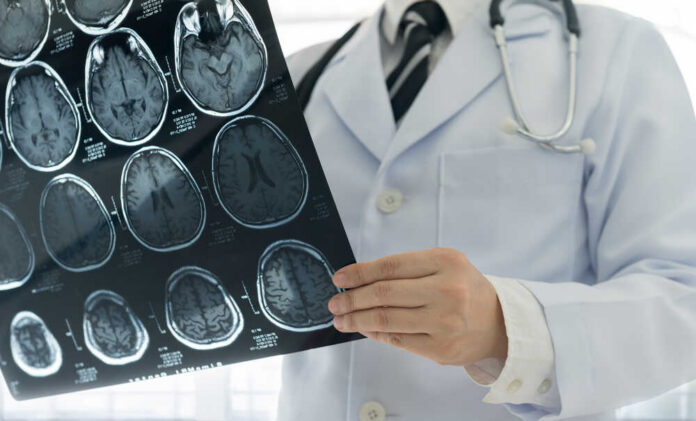
Scientists analyzed nearly 26,000 brain MRI scans and discovered metrics that predict cognitive decline up to seven years before symptoms emerge, potentially revolutionizing early intervention.
Story Highlights
- Kennedy Krieger Institute found elevated iron levels in brain regions forecast mild cognitive impairment years ahead.
- AI model BrainIAC, trained on 49,000 scans, estimates brain age and predicts dementia alongside other diseases from routine MRIs.
- Deep learning models achieve precise 2-year cognitive decline predictions with 70% variance explained.
- Diffusion MRI detects microstructural changes outperforming traditional volume measures for risk assessment.
- These tools shift medicine from reactive treatment to proactive prevention using hospital-available technology.
Iron Accumulation Predicts Decline Years Early
Kennedy Krieger Institute researchers tracked 158 older adults over seven years using Quantitative Susceptibility Mapping MRI. They detected elevated iron levels in the entorhinal cortex and putamen years before memory issues surfaced. This biomarker proved especially predictive in amyloid-positive individuals. Dr. Li noted QSM MRI availability in many hospitals enables practical application. These findings align with common sense prevention, catching problems before families face full crisis.
Validation across longitudinal data strengthens reliability. Iron buildup signals neurodegeneration silently progressing. Early detection allows lifestyle changes or trials targeting reversal. Conservative values favor personal responsibility through advance knowledge, empowering individuals over government dependency in later care stages.
Watch:
Deep Learning Models Forecast Precise Trajectories
A 2026 hybrid CNN model integrated 3D brain MRIs with clinical data. It predicted 2-year cognitive decline with mean absolute error of 1.303 points on the 18-point Clinical Dementia Rating scale. R² of 0.704 shows it explains 70% of variance. This accuracy matches regulatory thresholds for meaningful change. Models used large datasets like ADNI for robust performance.
Researchers combined structural imaging, demographics, and health records. Predictions aid patient stratification. High-risk asymptomatic people receive monitoring. This precision supports American ideals of efficient resource use, directing interventions where most needed without waste.
BrainIAC AI Revolutionizes Routine Scans
Harvard’s Mass General Brigham developed BrainIAC, trained on 49,000 MRIs. It estimates brain age and predicts dementia risk, tumor mutations, even cancer survival. The foundation model outperforms specialized AIs, especially with sparse data. Routine hospital scans now yield multi-disease insights. Faster brain aging correlates strongly with poor cognition over volume loss.
UK Biobank validation confirms generalizability across populations. Dr. Emer MacSweeney highlighted brain age metrics’ superiority. This tool promises equity if access expands, though MRI disparities persist. Facts support optimism for scalable prevention aligning with self-reliant health strategies.
Microstructural Changes Outperform Macro Measures
Diffusion MRI revealed radial diffusivity in white matter best predicts decline in normal, amyloid-positive adults. This microstructural metric surpassed cortical thickness or volume. Water diffusion patterns expose early damage invisible to standard scans. Studies on preclinical biomarkers confirm 2-7 year lead times.
Combining modalities enhances accuracy. Clinicians stratify risks for trials and planning. Pharmaceutical firms recruit precisely, cutting costs. Long-term, prevention-focused care reduces dementia burdens. Economic sense favors early action, preserving family resources and independence over late-stage institutionalization.
Watch:
Sources:
PMC/NIH (Study 1)
Kennedy Krieger Institute
AOL/MNT (Study 3)
Harvard/Mass General Brigham
PMC/NIH (Study 5)
ScienceDaily