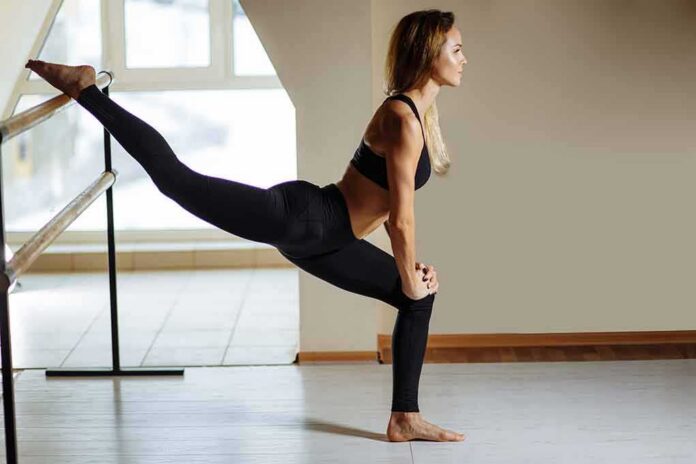
Holding a deep stretch before your workout after age 50 can quietly rob you of the strength and power you need most.
Quick Take
- A 2025 international consensus of stretching researchers says static stretching should not be treated as a universal injury-prevention tool.
- The panel warns against holding a stretch longer than 60 seconds per muscle before explosive or maximal effort.
- Cyclist Tadej Pogačar and other elite athletes favor movement-based warm-ups instead of long static holds.
- Other peer-reviewed studies find static stretching still helps older adults with mobility, balance, and joint stiffness.
A New Consensus Challenges An Old Gym Habit
For decades, coaches told everyone to stretch before exercise. A 2025 Delphi consensus, built from twenty international researchers across twelve countries, pushed back hard on that habit. The panel found no evidence that a single stretching session before a workout lowers injury risk, and warned against holding any stretch past 60 seconds per muscle before explosive movements like sprinting or jumping.
Muscle and tendon tissue naturally stiffens with age. Long static holds right before intense effort can briefly reduce force output, meaning a lifter or runner past 50 risks less power exactly when the body needs it most. That timing problem, not stretching itself, sits at the heart of the panel’s warning. National coverage of the consensus made the same point plainly for everyday exercisers.
What Elite Athletes Already Changed
Endurance athletes adjusted years ago. Slovenian cyclist Tadej Pogačar, widely called one of the best riders of his generation, favors dynamic movement drills, easy pedaling, and mobility work over long static holds before races. His routine matches what researchers now recommend for anyone chasing power output, not just professionals racing up mountain stages.
Doctors at Harvard have noted the same shift in thinking among trainers and physical therapists. Expert opinion has moved away from static stretching right before activity and toward a gradual, active warm-up period instead, since stretching a healthy muscle beforehand does not reliably prevent injury or soreness.
The Case For Stretching Doesn’t Disappear After 50
Not every study lines up neatly behind the anti-stretching message. Research on resistance-trained older women found static stretching actually improved leg extension and leg curl performance compared with a dynamic warm-up. A separate ten-week trial showed static stretching increased ankle flexibility and softened stiff tissue in older adults, with a meaningful jump in range of motion.
Other reviews found stretching sessions, even when used only as a comparison activity in clinical trials, still improved balance, knee strength, and overall physical function in aging participants. An eight-week program for elderly residents boosted joint range of motion and functional power, the kind of gains that help someone rise from a chair or catch their balance.
Sorting Out What Actually Matters
The disagreement is not really about whether stretching works. It’s about timing. Save long static holds for after a workout or a separate flexibility session. Before exercise, warm up with movement instead, light cardio, bodyweight squats, arm circles, anything that raises heart rate and primes the muscles for effort ahead.
Mayo Clinic sports medicine specialists put it simply: research over the past two decades hasn’t found that static stretching offers much benefit for cutting injury risk, especially when done right before activity. Static stretching still earns a place in a fitness plan over 50, just not as the first move before a hard set or a f