Spinach is not the iron powerhouse Popeye made it out to be — not because the vegetable lacks iron, but because the human gut can barely use the iron it contains.
Key Points
- Spinach does contain a meaningful amount of iron — roughly 2.7 mg per 100 grams raw, more when cooked — but almost all of it is non-heme iron, the plant-based form the body absorbs poorly.
- Multiple analyses put spinach’s real-world iron absorption at somewhere between 1.7% and 8%, versus 15–35% for heme iron found in red meat, poultry, and fish.
- The culprit is oxalic acid, a compound in spinach that binds iron into insoluble complexes the small intestine can’t process — though at least one controlled human study found oxalates play a smaller role than commonly assumed.
- Pairing spinach with vitamin C measurably improves absorption, but even doubled bioavailability leaves spinach behind animal sources and several other plant foods.
- The “spinach is a superfood for iron” belief persists partly on cultural memory (Popeye) and partly on a debunked myth about a decimal-point error — a myth nutrition scientists have had to correct for decades.
What the Numbers Actually Show
On paper, spinach looks respectable. A 100-gram serving of raw spinach delivers about 2.7 mg of iron, roughly 15% of the daily value, and cooking concentrates that further — reduction in volume pushes cooked spinach closer to 3.6 mg per 100 grams. Compared gram-for-gram against lentils (3.3 mg) or tofu (2.5–3.4 mg), spinach holds its own on a nutrition label. The trouble starts the moment that iron crosses from the plate into the digestive tract, where content and uptake part ways dramatically.
Independent estimates converge on a strikingly low absorption rate. Nutritics puts it at roughly 2%; Compound Interest’s chemistry breakdown calculates that the 2.6 mg of iron in a 100-gram serving nets out to a “paltry” 0.044 mg actually absorbed — about 1.7%. Other analyses land in a similar 1.7% to 2.9% band. Even the more generous figures, which stretch to 8% under favorable conditions, still trail heme iron’s 15–35% absorption rate by a wide margin. The vegetable’s iron content is real; its usable iron content is a fraction of that.
Why Absorption Collapses: The Chemistry of Oxalic Acid
The mechanism is well understood. Spinach carries two forms of trouble for iron uptake: it supplies only non-heme iron, the plant-derived form that human intestinal cells absorb far less efficiently than the heme iron bound inside animal muscle tissue, and it is unusually rich in oxalic acid — as much as 750 to 1,500 mg per 100 grams raw. Oxalates chelate, or chemically bind, free iron into insoluble iron-oxalate complexes that the small intestine cannot break apart. Those complexes simply pass through the gut unabsorbed. Cooking reduces oxalate content somewhat but does not eliminate the problem, which is why boiled or sautéed spinach still underperforms its iron count on the nutrition facts panel.
Pairing spinach with vitamin C helps, and the evidence for that is solid rather than folkloric. A controlled in vitro/human digestion study found that supplemental ascorbic acid doubled the bioavailability of iron from spinach. Doubling a very small number, however, still produces a small number — twice 1.7% is 3.4%, nowhere near heme iron’s efficiency. Vitamin C makes spinach’s iron somewhat more useful; it does not make spinach competitive with meat as an iron source.
How the Myth Took Root and Why It Won’t Die
Spinach’s iron reputation has cultural roots deeper than its nutritional reality. A popular legend claims spinach’s iron content was wildly overstated in the 1930s because of a decimal-point transcription error, later exploited by Popeye cartoons to sell vegetables to children. McGill University’s Office for Science and Society has traced this story carefully and concluded it is itself a myth: there was never a decimal-point error in the original measurements, and Popeye never actually attributed his strength to iron. What McGill’s researchers do confirm, plainly, is the underlying nutritional verdict — spinach “is not a particularly great source of iron”. The myth-about-the-myth is almost more interesting than the original claim, and it illustrates how nutrition folklore calcifies: a simple, flattering story about a vegetable survives far longer than the more complicated biochemical truth.
Spinach Against the Field: Meat, Legumes, and Fortified Foods
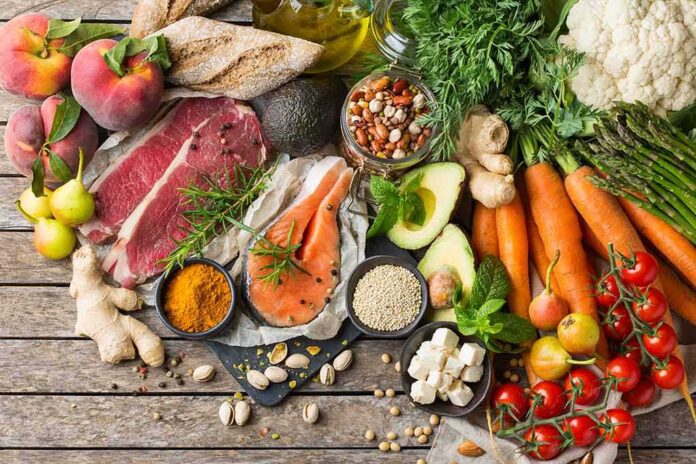
Set beside its competitors, spinach’s position becomes clearer still. Comparative analysis of iron sources for correcting deficiency finds red meat significantly more effective than spinach, citing the 15–35% absorption rate for haem iron against 2–8% for spinach’s non-haem iron. Among plant foods, spinach doesn’t necessarily lead either — lentils and legumes deliver comparable or greater iron content with their own absorption caveats, and fortified cereals sidestep the bioavailability problem entirely by adding iron in forms manufacturers have already engineered for uptake. None of this makes spinach nutritionally worthless; it remains a genuine source of folate, vitamin K, and other micronutrients unrelated to iron. But treated specifically as an anti-anemia food, it ranks well behind the standard clinical recommendations of red meat, liver, and iron-fortified staples.
Iron Maxxing:
Iron-rich foods work better when the meal is built for absorption.
Spinach — plant-based iron + folate
Quinoa — iron + steady carbohydrates
Eggs — protein + supporting nutrients
Parsley — small iron boost + vitamin C
Lemon — improves absorption of plant-based iron… pic.twitter.com/U5nSxnAtuB— Health & Nutrition Tips (@healthnutritipz) July 27, 2026
A Caveat Worth Weighing, and the Practical Takeaway
One dissenting data point deserves mention rather than dismissal. A controlled human study testing potassium oxalate found it did not measurably influence non-heme iron absorption from a kale meal, concluding that oxalic acid in fruits and vegetables is “of minor relevance” to iron nutrition. That finding complicates the tidy oxalate-villain narrative, and it suggests the fiber content and other compounds in leafy greens — not oxalate alone — may share responsibility for spinach’s poor iron yield. The consensus across the broader literature, however, still lands firmly on the same conclusion: spinach’s iron, however it’s chemically sabotaged, ends up mostly unabsorbed. For anyone managing anemia or simply trying to eat strategically, the practical guidance is straightforward — enjoy spinach for what it does well, pair it with vitamin C if iron is the goal, and lean on red meat, poultry, fish, legumes, or fortified foods when iron intake actually needs to move the needle.
Sources:
mindbodygreen.com, nutritics.com, myhealthcare.com, verywellhealth.com, wellness.alibaba.com, biologyinsights.com, eatingwell.com, economictimes.indiatimes.com, reddit.com, pmc.ncbi.nlm.nih.gov, pubmed.ncbi.nlm.nih.gov, alibaba.com