The speed you walk down a hallway may say more about your health than a full checkup.
Quick Take
- Large studies of older adults show slower walking speed predicts higher risk of death, even after doctors adjust for other health problems.
- A drop of just 0.1 meters per second in gait speed links to notably higher mortality risk across many studies.
- People whose walking speed improves over time tend to live longer than those whose speed never improves.
- Walking as exercise has been shown to grow brain regions tied to memory in a major clinical trial.
- Most of this evidence comes from older adults, so its meaning for younger people is still being worked out.
Why Doctors Watch How Patients Walk
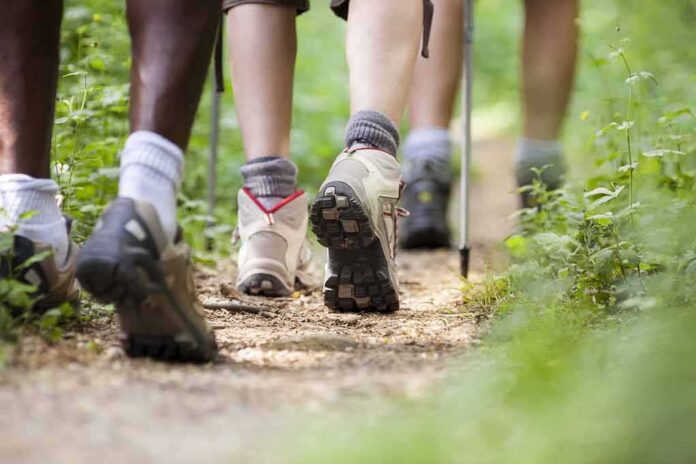
Gait speed is exactly what it sounds like: how fast someone walks at their normal pace. Researchers have turned it into one of the most studied numbers in aging medicine. A 2020 review found that a 0.1 meter-per-second drop in walking speed lined up with a real jump in death risk among older adults. Other cohort studies back this up again and again.
One striking study followed adults age 85 and older for five years. Gait speed alone predicted who would survive, independent of other health markers doctors normally track. That is a strong signal. It suggests walking speed captures something deeper than tired legs. It may reflect how well the heart, lungs, muscles, and nervous system are working together as a team.
Getting Faster Again May Matter, Not Just Starting Fast
A separate study tracked six different functional tests in older adults, including grip strength and balance. Only one measure predicted survival on its own: improved usual gait speed. Death rates after eight years told the story clearly. People whose gait speed improved had a 31.6 percent death rate. Those who never improved hit 49.3 percent. That gap is too large to ignore.
This matters because it hints gait is not just a symptom sitting on the sidelines. It may be something people can actively change to shift their odds. Slowing down is common as people age. But these numbers suggest working to walk faster again, through strength training or physical therapy, could carry a real payoff beyond just mobility.
Surgery Outcomes Also Track With Walking Speed
Doctors do not just watch gait for general aging risk. Heart surgery teams use it too. One study of cardiac surgery patients found that every 0.1 meter-per-second drop in gait speed came with more than double the risk of dying within a year after the operation. Another cardiac surgery database analysis found similar independent risk tied to slower walking speed before surgery. Surgeons increasingly treat a slow walk as a warning sign worth weighing before they operate.
A Systematic Look Ties Slow Gait to Heart Disease Too
A broad systematic review pooling many studies found each 0.1 meter-per-second reduction in gait speed came with a 14 percent higher risk of earlier death and an 8 percent higher risk of cardiovascular disease. That is not one study finding a fluke pattern. That is a meta-analysis, meaning researchers combined results across many separate research groups and still found the same signal holding up.
Walking and the Brain: What a Landmark Trial Actually Showed
Separate from mortality data, a widely cited trial published in the Proceedings of the National Academy of Sciences put sedentary older adults through a year of aerobic walking exercise. Their hippocampus, the brain region tied to memory, grew larger, and their memory scores improved compared to a control group. That trial tested walking as exercise, not the mechanics of an individual’s gait pattern, but the result still stands as real evidence that regular walking changes the brain over time.
Where the Evidence Runs Thinner
Almost all of this research comes from older adults, often those already dealing with health conditions or recovering from surgery. That does not weaken the findings for that group. It does mean claims about gait mattering the same way for a 35-year-old rest on much thinner ground. Different studies also use different speed thresholds to flag risk, ranging from 0.5 to 1.2 meters per second, so no single number works as a universal alarm bell.
Clinical gait exams also look beyond speed. Podiatrists watch how the head, shoulders, hips, knees, and feet move together, looking for uneven steps that hint at scoliosis, leg-length differences, or joint problems. That kind of visual exam adds another layer, catching mechanical issues that a stopwatch alone would miss. Combined with the mortality data, the message is consistent: how a person walks is a window into the whole body, not just the legs.
None of this means a slow walker is doomed or a fast walker is invincible. Gait speed is a marker, a strong one, that lines up with survival across dozens of studies. Whether speeding up your own walk directly extends your life, or simply reflects a body already in better shape, remains an open question researchers are still chasing.
Sources:
artofhealthyliving.com, academic.oup.com, ahajournals.org, sfera.unife.it, pmc.ncbi.nlm.nih.gov, pubmed.ncbi.nlm.nih.gov, jamanetwork.com, onlinelibrary.wiley.com, pnas.org, sciencedirect.com