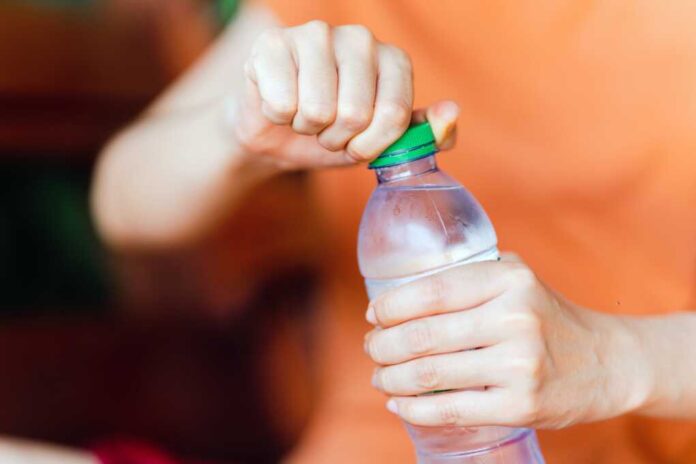
Could your daily habit of drinking from plastic bottles be adding 30,000 microplastic particles to your body every year?
Story Overview
- Drinking from plastic bottles may introduce up to 30,000 microplastics annually.
- Microplastics are pervasive in the environment and human body.
- Potential health risks are associated with microplastic ingestion.
- Experts suggest switching to glass or stainless steel containers.
The Hidden Cost of Convenience
Plastic bottles have become synonymous with modern convenience, but they come with a hidden cost. Recent research reveals that drinking from these containers might introduce up to 30,000 microplastic particles into your body each year. These tiny plastic fragments, less than 5 millimeters in size, are everywhere—in our oceans, our food, and now, our bodies. The implications of these findings are far-reaching, prompting experts to call for immediate behavioral changes.
Microplastics are not just an environmental issue; they are a personal health concern. Studies show these particles can enter the body through ingestion, inhalation, and possibly through skin contact. Once inside, they have been detected in blood, placenta, and even breast milk, raising alarms about their potential impact on human health. Though the full effects remain unclear, early evidence suggests links to oxidative stress, DNA damage, and reproductive issues.
Watch:
Scientific Scrutiny and Public Awareness
The scientific community has been focusing on microplastics since the early 2000s, initially highlighting marine pollution. Over the years, attention shifted to their presence in terrestrial and atmospheric environments, leading to discoveries in human exposure through daily habits like using plastic bottles. The timeline from 2018 to 2024 marks a growing realization and media amplification of the microplastic threat in consumables.
Public health organizations and environmental NGOs have been pivotal in raising awareness and advocating for change. While the bottled water and plastic packaging industries may resist regulation, the push from researchers and non-profits is gaining momentum. The call for reducing plastic use and switching to safer alternatives like glass or stainless steel containers is louder than ever.
1) Paper coffee cups lined with plastic release 55x more toxins when heated.
Tea bags release thousands of microplastics per cup.
Glass bottles can contain MORE microplastics than plastic (from lid paint).
Soluble fiber can prevent microplastic absorption. pic.twitter.com/S93iFJlV5j
— Patrick Sullivan Jr. (@realPatrickJr) August 3, 2025
Health Risks: Known and Unknown
While definitive answers about the health risks of microplastics are still in development, the precautionary principle is guiding public health recommendations. Microplastics have been linked to potential health risks in animals and cell cultures, leading scientists to advise minimizing exposure. The ubiquity of these particles in our environment and bodies necessitates urgent attention and action.
Experts emphasize the need for more research to fully understand the pathways and effects of microplastics on human health. However, the consensus is that the current evidence justifies precautionary measures. Reducing reliance on plastic and advocating for systemic changes are steps toward mitigating this under-recognized health risk.
Sources:
Science Alert
British Water Filter
Berkey Water Filter
ACS Publications
Harvard Medicine Magazine