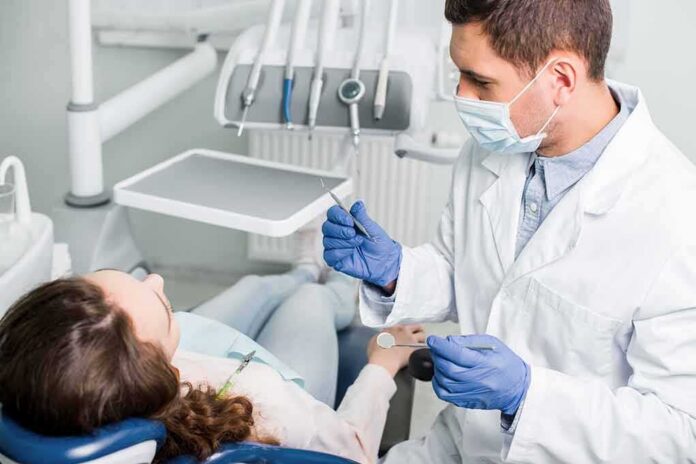
A longtime dental hygienist says five common habits before a dentist visit can throw off your exam, confuse your care team, and even hide warning signs of real problems.
Story Snapshot
- Registered dental hygienist Whitney DiFoggio, known online as Teeth Talk Girl, lists five mistakes patients make before dental appointments.
- Her tips cover brushing too hard, skipping meals, whitening teeth right before a visit, and staying quiet about pain or anxiety.
- DiFoggio has worked as a registered dental hygienist since 2015 and runs a public education platform on oral health.
- Dental anxiety research backs up her core message: talking openly with your dental team changes how care is given.
- The video does not cite clinical studies for each specific claim, so some details apply differently depending on the procedure.
A Hygienist’s Pre-Appointment Checklist
Whitney DiFoggio, identified on her website as a registered dental hygienist with experience dating back to 2015, posted a video outlining five mistakes people make before seeing the dentist. She built her platform, Teeth Talk Girl, into a public education brand that mixes clinical background with everyday advice for patients trying to get the most out of their visits.
Her list is simple and specific. Do not brush or floss aggressively right before an appointment. Do not skip meals unless a dentist tells you to fast. Avoid whitening your teeth right before a cleaning or restorative work. Tell your dental team about any pain, swelling, bleeding, or bad breath. And speak up if you feel anxious or have had a bad experience before.
Why Brushing Too Hard Can Backfire
DiFoggio warns that scrubbing teeth too hard right before an appointment can cause gum recession, worn enamel, and swollen or bleeding gums. Those signs can make it harder for a dentist to tell the difference between everyday irritation and a real problem needing treatment. Her video does not say exactly how much force causes this or how often it happens in real exam rooms, but the warning reflects a known risk in gum health care.
The meal advice follows similar logic. Skipping food before a routine cleaning is usually fine, DiFoggio says, but patients should always follow specific instructions tied to sedation, surgery, diabetes, or medication needs. Her video treats this as general guidance rather than a rule for every type of visit, since fasting requirements change based on what procedure is planned.
Whitening, Bonding, and Timing Concerns
DiFoggio also cautions against whitening teeth too close to a dental visit, saying it can raise tooth sensitivity and interfere with bonding during restorative work. She does not name a specific product, chemical strength, or time window in the video, so the advice works best as a general caution rather than a strict rule for every whitening product on the market.
Speaking Up Matters Most
The strongest part of DiFoggio’s advice lines up with a wider body of dental research: telling your dental team about pain, anxiety, or past bad experiences changes how they treat you. Dental anxiety affects a large share of patients, with one study finding roughly 60% of adults report at least some fear before a procedure. Health groups including the American Dental Association encourage patients to flag anxiety early so staff can slow down, explain tools before use, or offer breaks during treatment.
British and U.S. clinical guides describe similar strategies, often called “tell-show-do,” where a dentist explains a step, shows the instrument, then performs the action only after the patient understands what’s coming. Research groups have found this kind of open communication measurably lowers patient fear and improves follow-through on future visits, especially in communities where people avoid the dentist altogether.
None of DiFoggio’s five tips come with lab data, sample sizes, or named clinical trials attached to the video itself. That does not make the advice wrong, but it does mean patients should treat it as general guidance rather than a replacement for instructions from their own dentist, especially when sedation, surgery, or ongoing medical conditions are involved.
What This Means for Patients
The gap between viral health tips and formal medical guidelines keeps showing up across social media, and dental care is no exception. A creator with real clinical credentials can still deliver advice that works better as a starting point for conversation than as a universal rule. For patients, the takeaway is straightforward: brushing gently, eating normally, holding off on whitening, and being honest about pain or fear all make sense as habits, but the details still depend on what your own dentist tells you to do.
Sources:
youtube.com, teethtalkgirl.com, rdhmag.com, cda.org, oxfordhealth.nhs.uk, oasisdiscussions.ca