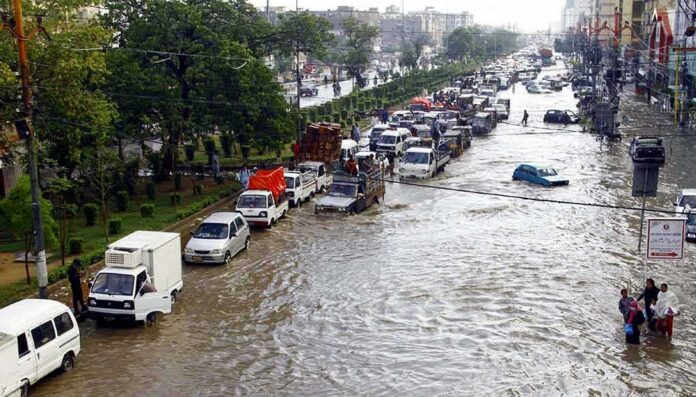
Millions of Americans woke up this week to flood alerts, stranded flights, and rescue crews pulling drivers out of flooded streets.
Story Snapshot
- Torrential rain triggered flood alerts for millions of people across the country in mid-September 2026.
- First responders used helicopters to rescue people trapped in flooded vehicles.
- Storms in the Southwest brought flash flooding even as wildfires burned nearby.
- Chicago’s O’Hare and Midway airports saw hundreds of flight cancellations and delays from the same wet pattern.
Flooding Swamps Neighborhoods From The Southwest To The Midwest
Flooding rains hit neighborhoods across the country this week, and first responders had to use helicopters to pull people from vehicles trapped in rising water. NBC News reported millions of Americans were under flood alerts as the storms rolled through, with correspondent Morgan Chesky tracking the damage as it spread from region to region.
The danger was not limited to one part of the map. In the Southwest, families faced powerful thunderstorms and a flash flood threat even while wildfires burned in multiple states nearby, a strange and dangerous combination of drought and deluge hitting the same region within days of each other. That mix forced emergency crews to juggle two very different disasters at once, stretching resources thin in communities already on edge.
Chicago’s Airports Become Ground Zero For Storm Delays
Chicago took one of the hardest hits from the storm system. Thunderstorms dumped one to three inches of rain across the metro area, which forecasters called the most rain the city had seen in a month. The downpour triggered ground stops at both O’Hare International Airport and Midway International Airport, snarling travel for thousands of passengers in a single morning.
The disruption piled up fast. Nearly 1,000 flights were delayed or canceled across Chicago’s two airports during the storm surge, with O’Hare alone recording well over a hundred cancellations and hundreds more delays as crews scrambled to reset schedules. Average delays stretched close to two hours, leaving travelers stuck at gates while the same wet weather pattern pushed toward the weekend.
Why Flood Alerts Can Sound More Dire Than They Are
Flood coverage often mixes several kinds of alerts into one big headline, and that can confuse people trying to figure out how much danger they are actually in. The National Weather Service uses a watch, warning, and advisory system built to show how certain and how severe a hazard is, not simply to announce that flooding has already started.
Research on flood communication backs this up. Studies of how the public reads these alerts found that people often struggle to tell the difference between a watch, which means conditions are ripe for flooding, and a warning, which means flooding is happening or about to happen. That gap matters because a huge watch area can sound just as scary as a smaller, more urgent warning, even though the risk level is very different. Families weighing whether to evacuate, cancel travel, or simply watch the radar need that distinction spelled out clearly, not buried in broadcast shorthand. Local officials and national outlets both carry responsibility for making the terms plain, especially when millions of people are deciding in real time whether to change their plans.
Sources:
youtube.com, rollingout.com, nbcnews.com, avi-go.com, repository.library.noaa.gov