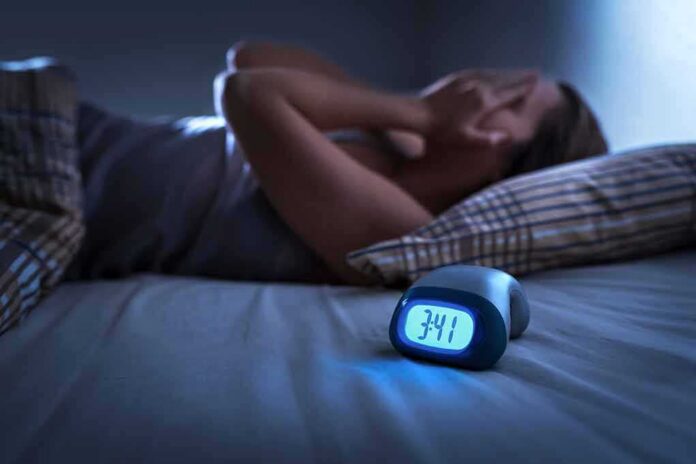
The most durable lesson in this research is not that the bladder suddenly became a sleep organ; it is that regularity in sleep timing and sleep quality may be one of the quietest levers shaping overactive bladder risk and symptom burden.
Key Points
- Recent observational research links weaker rest-activity rhythms and poorer sleep profiles with a higher prevalence of overactive bladder.
- Sleep duration does not behave like a simple more-is-better variable; several analyses point to a U-shaped pattern, with both short and long sleep associated with higher risk.
- The relationship runs in two directions: bladder symptoms disrupt sleep, and disturbed sleep or circadian misalignment may also worsen urinary symptoms.
- The mechanism is biologically plausible, involving circadian control of detrusor activity, nocturnal urine production, and the broader brain-kidney-bladder rhythm.
Why Sleep Regularity Matters More Than Most People Realize
Overactive bladder is usually discussed in terms of urgency, frequency, and nocturia, but the emerging literature keeps pointing to a less obvious variable: the stability of the sleep-wake rhythm itself. In the newest NHANES-based analysis, adults with weaker rest-activity rhythms and less favorable sleep profiles had a higher prevalence of overactive bladder, with the study reporting a weighted OAB prevalence of 21.4% and inverse associations for relative amplitude and sleep efficiency after adjustment. That matters because “sleep” here is not just total hours in bed; it is the degree to which the body keeps a coherent daily rhythm.
This is where the subject becomes more interesting than a generic “sleep hygiene” story. The bladder is governed by circadian biology just as much as it is governed by anatomy and behavior. Kidney handling of water, antidiuretic hormone release, autonomic tone, and detrusor contractility all vary across the day and night. When those rhythms are blurred, the bladder is more likely to become noisy at the wrong times. The practical takeaway is simple, but not trivial: irregular sleep-wake timing is not a cosmetic habit; it is a physiologic stressor.
What the Research Actually Shows
The evidence base is not a single dramatic experiment; it is a stack of observational signals that point in the same direction. One U.S. analysis found that weaker rest-activity rhythm and unfavorable sleep profile were associated with overactive bladder, while another NHANES-based study reported a U-shaped relationship between sleep duration and OAB risk, with both short sleep and long sleep linked to higher risk. A separate cross-sectional study found that intermediate and poor sleep patterns were associated with higher OAB risk, along with a graded increase in mild, moderate, and severe OAB. Taken together, these studies do not prove causation, but they do make the association hard to dismiss as coincidence.
That distinction matters. Cross-sectional data can tell you what travels with what; it cannot tell you with certainty which direction the traffic is moving. OAB may fragment sleep because of repeated nighttime awakenings, and poor sleep may in turn amplify urgency perception, autonomic instability, or nocturnal urine production. The literature on women with OAB is especially clear that not every awakening is purely bladder-driven, and not all poor sleep should be blamed on the bladder alone. In other words, the relationship is bidirectional, which is exactly why it is clinically easy to miss and physiologically important.
The Mechanism: Circadian Misalignment, Nocturia, and the Bladder
The strongest mechanistic explanation is circadian desynchronization. Nocturia and overactive bladder sit inside a broader “brain-kidney-bladder” timing system in which sleep, urine production, and bladder function are supposed to be synchronized. When sleep is irregular, the timing of antidiuretic signaling and autonomic regulation can drift; the result is a bladder that is more likely to produce symptoms at night or wake the sleeper too easily. This is why researchers keep circling back to rest-activity rhythms rather than sleep duration alone. Rhythm quality often captures the biological order that clock time by itself misses.
There is also a historical reason this line of inquiry keeps resurfacing. Earlier studies linked interrupted sleep, nocturia, and bladder symptoms long before the newest population analyses arrived. More recent reviews have argued that the circadian system may not merely modulate urinary symptoms but sit upstream of them in some patients, making sleep-wake regulation a potential therapeutic target alongside standard urologic management. That is still a hypothesis, not settled doctrine, but it is no longer a fringe one. The field has moved from “is there a connection?” to “which part of the connection is most actionable?”
Sleep science consistently demonstrates that regularity of sleep timing often matters as much as total duration for circadian alignment and daytime function.@sleepagotchi core scoring system rewards closeness to user-defined bedtime and wake targets, directly targeting this… pic.twitter.com/GSDz36hjSm
— Gusion (@Gusion_Zeka) August 4, 2026
Why the Sleep-Duration Story Is More Complicated Than It Sounds
If there is one place where careless reporting can mislead readers, it is sleep duration. People like tidy rules, and sleep research rarely offers them. The Frontiers analysis found a U-shaped association, meaning both short and long sleep were linked to greater OAB risk, with the lowest-risk range around 6 to 9 hours. Another NHANES-based cohort study reached a similar conclusion, reporting increased risk at both extremes and estimating an optimal sleep duration of roughly six hours in that dataset. Those findings do not mean six hours is a universal target; they mean that duration alone is an imperfect proxy for the underlying biology.
That nuance is precisely why sleep regularity deserves more attention than the usual “get more sleep” advice. A person can spend enough hours in bed and still have a biologically scrambled night if bedtime, wake time, and sleep efficiency swing from one day to the next. Conversely, a stable schedule may sometimes matter more than chasing a fashionable duration number. The research package points in that direction consistently: rhythm fragmentation, poor sleep efficiency, and disrupted timing are the recurring signals, not merely insomnia in the abstract.
What This Means for People With Overactive Bladder
The immediate implication is not that every OAB patient should treat sleep as a cure-all. It is that sleep-wake regularity belongs in the same conversation as fluid intake, caffeine timing, bladder training, pelvic floor work, medication review, and evaluation for nocturia drivers such as sleep apnea or nocturnal polyuria. In practice, that means clinicians should ask not only how many hours someone sleeps, but when they sleep, how often they wake, and whether their rhythm is consistent from day to day. Those details often reveal more than a single bedtime number ever will.
For readers trying to translate the science into action, the most defensible habit tweak is boring in the best possible way: keep sleep and wake times steady, reduce late-night rhythm disruption, and treat fragmented sleep as a legitimate urologic clue rather than an unrelated nuisance. The evidence does not support miracle claims, and it does not yet prove that fixing sleep will reverse OAB on its own. It does support a more disciplined conclusion: irregular sleep is one of the most plausible and most underappreciated amplifiers of bladder symptoms, and that makes it worth correcting.
Sources:
mindbodygreen.com, imedic.health, frontiersin.org, sciencedirect.com, pmc.ncbi.nlm.nih.gov, profiles.wustl.edu, pubmed.ncbi.nlm.nih.gov, medicalxpress.com, ncbi.nlm.nih.gov, medicalnewstoday.com, byramhealthcare.com