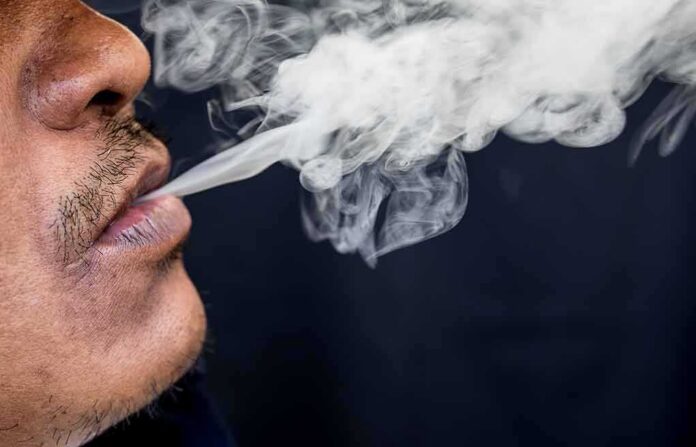
Scientists found the exact brain cells that turn a cannabis high into a panic spiral, and the trigger lives in a place called the central amygdala.
Story Snapshot
- Researchers linked cannabinoid-driven anxiety in mice to a specific group of brain cells called somatostatin neurons.
- Mice given cannabinoids froze more and avoided a predator scent more than untreated mice.
- Silencing those neurons stopped the extra avoidance, pointing to a direct cause-and-effect link.
- The drug worked by weakening the brain’s natural “brake” on these fear-related cells, especially under stress.
- The study, published in Nature Communications, used mice only, so human results still need testing.
A Fear Circuit Hiding Inside The Amygdala
Researchers at Northwestern University set out to answer a question millions of cannabis users have asked themselves after a bad session: why does the same drug that relaxes one person send another into a racing-heart panic. Their answer points to a tiny cluster of brain cells tucked inside the central amygdala, the almond-shaped region long known as the brain’s alarm system.
The team gave mice a cannabinoid drug, then exposed them to the scent of a predator, a classic way to test fear behavior in rodents. Mice that got the cannabinoid froze more often and spent less time sniffing around the scary scent compared to mice that didn’t get the drug. That is the rodent version of a panic attack, and it happened reliably across repeated trials.
The Cells Behind The Panic
Digging into the brain activity behind that behavior, the scientists traced the extra fear response to somatostatin neurons, a specific cell type inside the central amygdala. These cells lit up more in cannabinoid-treated mice, and the pattern matched the animals’ freezing and avoidance almost exactly. The underlying paper, published alongside the Northwestern announcement, described cannabinoids as able to “precipitate anxiety and panic reactions” in both humans and lab animals, tying the mouse circuit to a pattern long reported by cannabis users themselves.
To prove the neurons actually caused the fear, not just correlated with it, researchers used genetic tools to switch the cells off. When they silenced the somatostatin neurons, the drugged mice stopped avoiding the predator scent as much. The anxious behavior didn’t fully disappear, but the extra avoidance tied to the drug largely vanished, a strong signal that this cell group drives the effect rather than just reflecting it.
How The Drug Flips The Switch
The mechanism comes down to a brake-and-accelerator system. Normally, the somatostatin neurons stay in check thanks to inhibitory signals holding their activity down. The cannabinoid weakened that natural brake, letting the neurons fire more freely. Higher doses combined with added stress made the effect even stronger, suggesting the brain’s fear circuit reacts to a mix of drug exposure and emotional pressure rather than the drug alone.
That stress-dose combination matters because it fits what cannabis users already describe anecdotally: a joint at a relaxed barbecue feels different than the same amount smoked during a stressful week. The study suggests that difference isn’t just mood or mindset. It may reflect real changes in how much the brain’s inhibitory brake gets released under pressure.
Why This Fits A Bigger Pattern
This finding lines up with decades of research showing cannabis compounds affect anxiety in a dose-dependent, almost split-personality way. Lower doses of tetrahydrocannabinol (THC) often calm animals down, while higher doses tend to ramp anxiety up, a pattern seen across many studies on mood and cannabinoids. Cannabidiol (CBD), a different cannabis compound, tends to reduce anxiety at most doses tested without the same flip-the-switch risk tied to THC.
That dose-dependent split helps explain why cannabis gets credit for calming nerves in one conversation and blamed for panic attacks in the next. Both reactions can be true, depending on dose, stress level, and apparently which neurons get activated. The new mouse data gives that old observation a specific cellular address inside the central amygdala.
What Comes Next For Research
The study used mice, not people, so the exact circuit still needs confirmation in human brains through imaging or controlled dosing studies. That gap is normal for early circuit research and doesn’t undercut what the mouse data showed. The next real test is whether the same somatostatin pathway lights up in human brain scans during cannabis-triggered anxiety, which would turn a mouse discovery into something doctors can act on.
For now, the takeaway is straightforward and useful. Anxiety after cannabis use isn’t just “in your head” in some vague emotional sense. It traces to a measurable shift in specific brain cells, shaped by dose and stress, and that gives researchers an actual target for future treatments rather than a shrug.
A cannabis-like drug activated fear-related brain cells in mice, offering clues to why high doses of cannabis can sometimes trigger anxiety. https://t.co/4hQTzb7xKM pic.twitter.com/mOEJE5Obki
— Earth.com (@EarthDotCom) October 6, 2026
Understanding that mechanism matters beyond the lab. Cannabis legalization keeps expanding across the country, and more people are experimenting with higher-potency products than past generations ever touched. Knowing exactly how and why some doses backfire into panic gives users, parents, and doctors real information instead of guesswork dressed up as advice.
Sources:
sciencedaily.com, neurosciencenews.com, genengnews.com