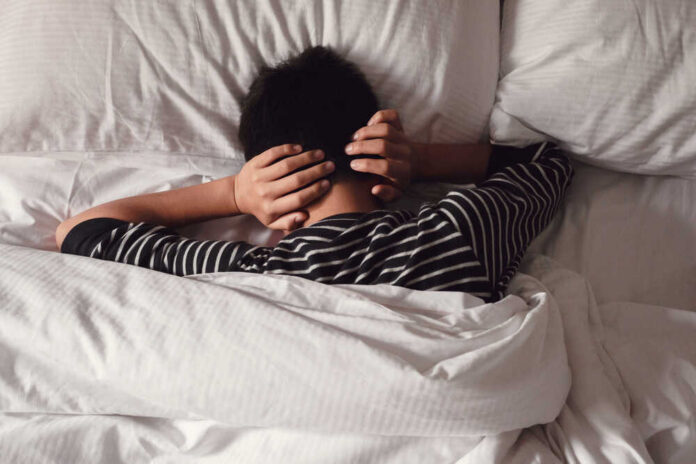
The “sleep problem” in your house might be hiding in plain sight—right above your head.
Story Snapshot
- Amber bulbs (about 1600–1800K) aim to cut blue light exposure at night to protect melatonin and circadian rhythm.
- Swapping evening lighting in bedrooms, bathrooms, and hallways can matter more than people expect, especially 1–3 hours before bed.
- Clinical results cited in consumer guides include faster sleep onset and improved sleep efficiency when users avoid blue-rich light at night.
- Brands now market “zero-blue” or “virtual darkness” amber LEDs, often emphasizing flicker-free and low-EMF design.
Amber Lighting Works Because Your Brain Treats Light Like a Schedule
Amber lighting isn’t a spa fad; it’s a practical response to how human biology reads the modern home. After sunset, the brain expects darkness and starts preparing sleep hormones, especially melatonin. Bright white LEDs and blue-heavy screens can send the opposite signal: stay alert, stay awake. Amber bulbs—typically in the 1600–1800K range—try to mimic firelight and candlelight, keeping visibility while minimizing the wavelengths most associated with nighttime alerting.
The appeal for adults over 40 is obvious: you don’t want another supplement, another app, another wearable nagging you. A screw-in bulb feels almost laughably simple. That simplicity is the hook—and also the reason you should take the details seriously. “Warm” lighting is not automatically “sleep-friendly.” Many standard “soft white” bulbs still produce enough blue spectrum to act like a small sunrise in your living room at 10 p.m.
Why Blue Light Became a Bedroom Intruder in the First Place
Homes used to dim naturally. Incandescent bulbs leaned warm, and evenings were darker by default. The post-2000 lighting revolution flipped that. Cool, efficient LEDs spread rapidly, and many peak strongly in the 450–480nm range commonly discussed in blue-light research. Add tablets, TVs, and phones, and you get a late-night environment that behaves like an extended afternoon. Consumer sleep guides point to research linking blue light exposure to meaningful melatonin suppression, which matches the lived experience of “tired but wired.”
That shift also explains why amber is having a moment now, not 30 years ago. People didn’t need a “circadian bulb” when the entire household naturally fell into lower light after dinner. Today, a kitchen remodel can accidentally turn the house into a film studio: recessed ceiling cans, bright under-cabinet strips, daylight-balanced bulbs everywhere. If you’re waking at 2 a.m. more often than you’d like, your lighting choices may be part of the pattern you’ve normalized.
The Practical Promise: Better Sleep Without a Prescription
The bolder claims around amber bulbs come from reported improvements in sleep onset and sleep efficiency when users switch away from blue-rich light at night. One frequently repeated result in the consumer research is roughly 19 minutes faster sleep onset and about a 9.9% improvement in sleep efficiency under amber conditions compared with blue.
Amber lighting fits that ethos when it’s used honestly: it’s not a cure, it’s an environment change. If your bedtime routine includes bright vanity lights, a hallway lit like an office, and a phone two inches from your face, you’re fighting your own biology. Fixing the light first is a rational step before escalating to medications or expensive gadgets.
Where to Put Amber Bulbs So They Actually Matter
Placement beats perfection. Bedrooms get the first swap because you spend the final waking minutes there—reading, folding laundry, talking, or watching TV. Bathrooms come next for a reason nobody likes to admit: the midnight trip to the toilet under a bright overhead can feel like a camera flash to the nervous system. Hallways and bedside lamps matter because they create the “path” your brain associates with winding down instead of gearing up. The goal is simple: no bright, blue-heavy light in the last 1–3 hours.
Brightness matters as much as color. “Virtual darkness” is the idea many brands sell: amber spectrum plus low intensity. If you blast any light at high brightness, you can still stimulate alertness—especially if you aim it at eye level. Choose lampshades, indirect fixtures, and lower wattage where possible. If you can read a book comfortably but the room doesn’t feel like a workspace, you’re closer to the target than the person with a perfect spectrum bulb running at full power.
Buying Claims to Trust, Buying Claims to Question
Marketing language can get out of hand, so use a checklist mindset. Credible product descriptions emphasize low color temperature (often 1600–1800K) and heavy reduction of blue wavelengths. Some highlight flicker-free design, which matters because flicker can cause discomfort for sensitive users even when they can’t consciously see it. NASA references appear in this space as a credibility boost tied to circadian research, but the practical question remains: does the bulb measurably reduce blue output and does it fit your routines?
Question any pitch that makes amber the whole story. The strongest non-commercial guidance still centers on overall nighttime lighting: dim, warm, and consistent. If your household keeps bright overheads on until you climb into bed, an amber bulb in one lamp becomes a token gesture.
The real win of amber lighting isn’t the bulb—it’s the moment you notice how much modern life trained you to live under noon-day lighting at midnight. That awareness is power. Once you control the evening environment, you can test what actually moves the needle: earlier dimming, fewer overheads, a darker bathroom, a warmer bedside lamp. If you sleep better, you’ll know it quickly—because nothing feels more expensive than exhaustion the next day.
Sources:
https://blissbury.com/blogs/news/amber-vs-white-light-for-better-sleep
https://www.blockbluelight.com/blogs/news/what-is-the-best-color-light-for-sleep
https://www.startwithsleep.com/product-page/amber-light-bulb
https://kozehealth.com/products/koze-sleep-single-pack
https://www.interiormedicine.com/amber-lighting
https://www.sleepfoundation.org/bedroom-environment/what-color-light-helps-you-sleep
https://norblighting.com/everyday-sleep/