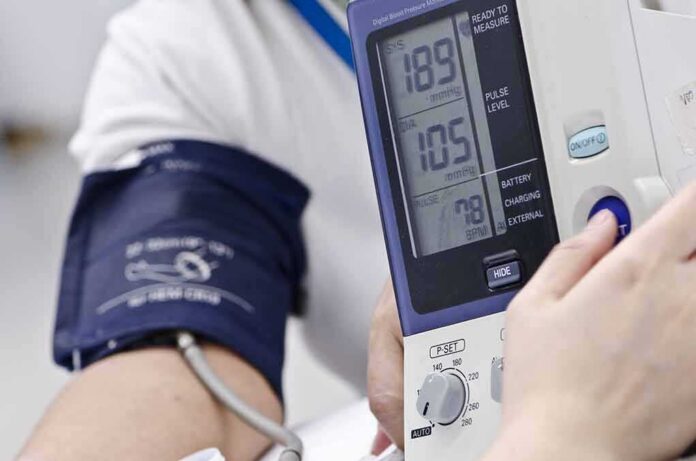
One simple number on your blood pressure cuff may be quietly adding years to your brain’s age, long before you feel a single symptom.
Story Snapshot
- Every 5-point rise in systolic blood pressure over time links to about 1 extra year of “brain age.”
- People living above guideline blood pressure levels show brains over 3 years “older” than those at ideal levels.
- Midlife blood pressure harms the brain more clearly than late-life blood pressure, where risks become U-shaped and messy.
- Office readings miss much of the danger; 24-hour blood pressure and lifelong patterns tell the real story.
How A Common Blood Pressure Reading Turns Into “Brain Age”
Researchers now use brain scans and computer models to estimate how old your brain looks compared with how old you are. They call this gap “brain age,” and it turns out systolic blood pressure – the top number on the cuff – pushes that gap wider. In one major study, every 5 millimeters of mercury higher time-weighted systolic pressure over several years was tied to about one extra year of brain age. That shift showed up even after accounting for normal aging and basic health factors.
The same study compared people who kept their systolic blood pressure within ideal guideline ranges to those who floated above them most of the time. The higher-pressure group had brains that appeared more than 3 years older than the ideal group. This was not a scare headline; it was measured on magnetic resonance imaging, using a trained model of healthy aging. For people in midlife, that extra three years is not just cosmetic. It marks more wear and tear on white matter, the wiring that keeps thinking sharp.
Why Midlife Pressure Hits The Brain Hardest
Large reviews of decades of data show a clear pattern: high blood pressure in your 40s, 50s, and early 60s raises the risk of later dementia and cognitive decline. One meta-analysis pooling more than two million people found that midlife hypertension increased dementia risk by about 20 percent. Other work following people for 20 to 30 years reported that those with sustained high systolic pressure had a much higher chance of ending up with serious memory problems, even if late-life readings looked fine.
Recent cohort research goes further and suggests even blood pressure considered “normal” by many doctors can be risky when it starts early. One study found that systolic pressure around 111 millimeters of mercury in young adulthood marked a threshold where the brain paid a price in midlife. White matter hyperintensities – bright spots on scans that signal small vessel damage – and thinking scores worsened as that number crept up. This is a classic case where early discipline around weight, sleep, and salt can avoid heavy medical dependence later.
The Danger You Do Not See On Office Readings
Blood pressure taken once in a doctor’s office gives a snapshot, but the brain seems to care more about the movie. A landmark study using ambulatory monitors found that the 24-hour average systolic pressure, not the clinic reading, predicted how much new white matter damage appeared on scans after two years. Worsening around-the-clock pressure tracked with declines in executive function and processing speed, even when starting readings looked normal.
Other work has looked at cumulative blood pressure exposure across many years and tied it to faster cognitive decline, higher dementia risk, and greater all-cause death in older adults. That long-term load, much like long-term credit card debt, has more impact than any single bill. For readers skeptical of quick-fix drug pushes, this supports a broader view: walking, diet, and real sleep hygiene “pay down” vascular debt in ways pills alone cannot fully match.
When Higher Pressure Seems Protective In Old Age
The story does not end with “lower is always better.” Once people reach their late 70s and beyond, blood pressure and brain risk become more complicated. A pooled analysis of seven studies with over 17,000 participants found a U-shaped curve: in the oldest group, systolic readings around 160 to 170 sometimes lined up with the lowest dementia risk. Other work in treated seniors showed that those with systolic pressure at or above 130 declined less over a year than those forced below that level.
Some studies even report worse thinking scores when systolic pressure drops over the lifespan or is pushed very low, with more falls, kidney injury, and death in frail elders driven below 120. The likely explanation is straightforward. Once arteries are stiff and brain vessels fragile, pushing pressure too low can starve tissues and speed frailty. This does not cancel the midlife data; it says that targets must respect age, health status, and orthostatic drops when standing.
What All This Means For Real People
New brain age research from large biobank cohorts supports a simple, grounded message: for midlife adults, especially men, higher systolic pressure tracks with older-looking brains and worse white matter health across the full range of readings. Optimal pressure keeps the brain “younger,” and every ten-point rise appears to nudge brain age upward by weeks to months. At the same time, the damaging link weakens in late life, and very low pressure in frail seniors can backfire, raising dementia and mortality risk.
Put plainly, if you are in your 40s, 50s, or early 60s, ignoring creeping systolic pressure because “I feel fine” is a bad bet for your future mind. Track that top number over years, ask for ambulatory monitoring if office readings look borderline, and focus on practical basics first: weight control, daily walking, less sugar, and better sleep. Then work with a doctor who is willing to set different targets for sturdy midlife bodies and fragile late-life ones. That approach aligns with both the best evidence and basic common sense.
Sources:
pmc.ncbi.nlm.nih.gov, ahajournals.org, pubmed.ncbi.nlm.nih.gov, ncbi.nlm.nih.gov, nia.nih.gov, frontiersin.org