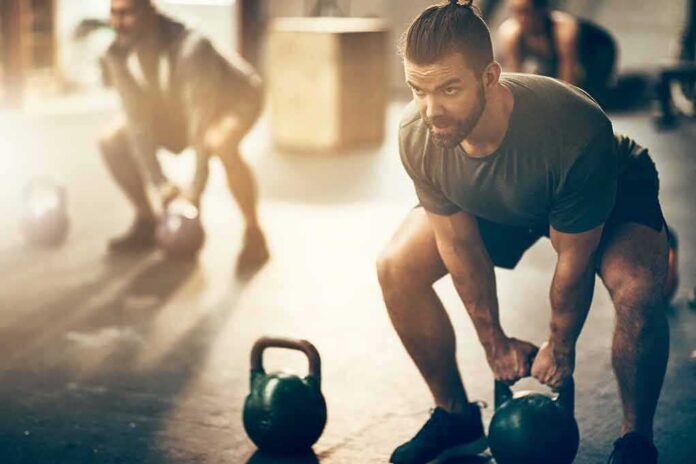
The squat does not injure the lower back by itself; it exposes whatever weakness already exists in a lifter’s bracing, hip mobility, or trunk position, and that distinction is the whole story behind the current wave of “simple tweak” advice circulating among coaches and physical therapists.
Key Points
- Coaches and rehab professionals converge on a handful of technique changes — stance width, hip hinge, core bracing, tempo, and depth — that plausibly shift load away from the lumbar spine.
- The mechanism is sound biomechanics: a more upright trunk and controlled pelvis reduce the lever arm the low back has to resist.
- No controlled trial in the public record isolates one tweak as superior; the advice is convergent but not independently validated by force-plate or clinical data.
- Relief from a cue is often temporary unless it’s paired with underlying strength, mobility, or motor-control work.
- Ordinary training discomfort and genuine injury require different responses — the tweak is a technique fix, not a substitute for diagnosis.
Why the Squat Loads the Spine in the First Place
Every squat is a battle between two levers: the hips and knees, which are built to produce large forces, and the lumbar spine, which is built for stability, not raw force production. When the trunk leans too far forward, the bar’s weight moves further from the hip joint, and the erector spinae muscles have to work harder isometrically to keep the spine from folding under the load. This is basic torque physics, not opinion — the longer the moment arm between the load and the joint, the greater the muscular and disc stress required to resist it. Coaching sources at HSS and NSCA describe this exact relationship when they emphasize keeping the trunk more vertical and the weight distributed over the mid-foot.
Pelvic control compounds the problem. As fatigue sets in or depth increases beyond a lifter’s hip mobility, the pelvis tends to tuck under at the bottom of the movement — a phenomenon coaches call butt wink — which flexes the lumbar spine under load rather than keeping it neutral. Flexion under compressive load is precisely the loading pattern associated with disc irritation in the broader spine literature, which is why so much of the coaching advice fixates on preventing that tuck rather than on the squat itself.
The Tweaks Coaches Actually Recommend
Strip away the branding and the “simple tweak” articles circulating online resolve into a fairly consistent toolkit. Hip-width or shoulder-width stance with toes turned slightly out gives the pelvis room to move without excessive rounding. Core bracing — tightening the abdominal wall as if absorbing a punch — creates intra-abdominal pressure that stiffens the trunk before the spine ever has to resist bending load. Hinging the hips back rather than letting the knees travel forward keeps the bar path closer to midline, which shortens that lumbar lever arm. And several sources recommend simply reducing the load or the depth temporarily, on the logic that a lighter or shallower squat asks less of a spine that is currently the weak link in the chain.
One less obvious modification worth naming specifically is tempo. A coaching demonstration built around slow, three-second eccentric and concentric phases argues that decelerating the bar forces better positional awareness throughout the range of motion, rather than letting momentum carry a lifter through a compromised position. It is a small change, easy to apply in any gym, and consistent with the broader principle running through all of this advice: control beats speed when the spine is the vulnerable structure.
Technique Fix Versus Underlying Cause
The more clinically minded sources are careful to frame technique cues as management, not cure. Hinge Health and several physical-therapy-adjacent creators pair every squat modification with a caveat about hip mobility, core endurance, or gradual load progression — the implication being that a cue can mask a limitation temporarily without resolving it. That matters for anyone tempted to treat a tweak as a permanent solution: if the underlying issue is limited ankle dorsiflexion, weak glutes, or a stiff thoracic spine, the pain is likely to resurface once the novelty of the cue wears off or the load climbs back to a working weight.
There is also a diagnostic line worth drawing that the coaching content rarely draws for itself. Muscular soreness or a mild ache from overloading an unconditioned back is a training-management problem, well suited to the cues discussed here. Sharp, radiating, or persistent pain — especially with numbness, tingling, or pain that doesn’t ease with rest — is a different category entirely and belongs in front of a physician or physical therapist, not a technique checklist. None of the sources reviewed distinguish these categories with real precision, which is a meaningful gap given how broadly “lower back pain when squatting” gets used as an umbrella term.
Regular squats hurt my lower back, and it’s hard to go low being 6’4”. I switched to Zercher squats. Benefits
• Unmatched Core & Upper Back Recruitment: Holding the bar in front forces your anterior core, upper back, and traps to work double time to prevent collapse.
• Maximum… pic.twitter.com/PFf6eGCeFg— Zack Morris (@MrZackMorris) August 6, 2026
The Practical Verdict
The squat tweak is worth trying, and the biomechanical logic behind it is sound: reduce trunk lean, brace before you move, control the pelvis through the bottom position, and lighten the load until form holds under fatigue. That is defensible, evidence-informed coaching, consistent across independent sources with no financial reason to agree with one another. What it is not is a validated clinical intervention with measured outcomes, and it is not a substitute for figuring out why the back became the limiting factor in the first place. Treat the tweak as a smart first move — and treat persistent or worsening pain as a signal to get an actual diagnosis rather than a better cue.
Sources:
mindbodygreen.com, hygieia.com.sg, backinshapeprogram.com, hss.edu, gymreapers.com, thestrength.co, nsca.com, spineandpainla.com, youtube.com