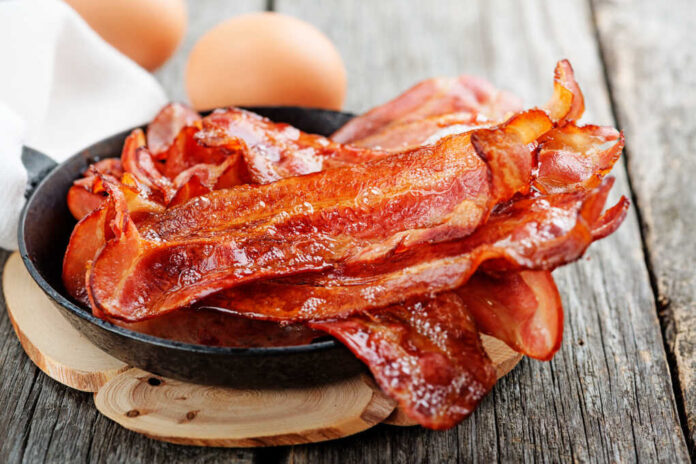
Lab-grown bacon could soon hit American tables without a single pig being slaughtered, but this artificial meat push raises serious questions about food safety.
Story Highlights
- UK startup Higher Steaks develops first lab-grown bacon prototype combining animal cells with plant ingredients
- University of Edinburgh creates “FaTTy” pig fat cell line that grows indefinitely without genetic modification
- Production costs plummeted from $330,000 per burger in 2013 to under $10 per patty today
- Cultivated meat market projected to reach $5-30 billion by 2030, threatening traditional farming communities
Laboratory Bacon Emerges as Agricultural Alternative
Higher Steaks announced the world’s first lab-grown bacon prototype, marking a significant shift away from traditional pork production. The UK company combines 70% cultivated animal cells with 30% plant-based ingredients to create bacon rashers, while their pork belly uses a 50-50 split. CEO Benjamina Bollag claims this approach delivers sustainable meat without taste compromises, though the product remains years from market availability.
The company plans consumer tasting events in 2025 to demonstrate their prototype, representing a critical test for public acceptance. This development coincides with growing concerns about conventional agriculture’s environmental impact, though questions remain about the long-term safety and nutritional value of laboratory-produced meat alternatives.
We May Soon Be Able to Eat Bacon Without Killing Pigs
🔥they want us to actually start eating tumors ‼️👇🔥 https://t.co/KTNZx9aDVg— ONE WING DUCK (@ONEWINGDUCK1) November 29, 2025
Scientific Breakthrough Addresses Regulatory Hurdles
Researchers at the University of Edinburgh’s Roslin Institute developed a revolutionary pig fat cell line called “FaTTy” that addresses major regulatory obstacles facing the cultivated meat industry. These cells grow indefinitely without genetic modification, meeting strict European Union and New Zealand requirements that have previously blocked lab-grown meat approval. Dr. Tom Thrower emphasized the unprecedented nature of this discovery, noting these cells retain exceptional efficiency in fat production.
The FaTTy cell line produces fat composition closely resembling traditional pig fat, with slightly higher monounsaturated fats and lower saturated fat levels. Professor Xavier Donadeu suggests potential applications could extend to feeding astronauts in space, highlighting the technology’s ambitious scope beyond conventional food production.
Watch:
Economic Disruption Threatens Traditional Farming
Artificial intelligence integration has achieved 40% production cost reductions, while bioreactor scaling has increased output by over 400%. These technological advances suggest cultivated meat could reach cost parity with conventional meat within seven to ten years, potentially devastating rural farming communities that depend on livestock production. The global cultivated meat market already shows dramatic growth projections.
Around 30 cell-based meat startups have launched since 2014, though funding slowed in 2024-2025 due to cost-efficiency concerns and consumer skepticism. Traditional pork producers face an uncertain future as venture capital flows toward laboratory alternatives, raising questions about food security dependence on technological solutions rather than proven agricultural methods.
Watch;
Sources:
Higher Steaks Unveils World’s First Lab-Grown Bacon
Bacon in Space: Lab-Grown Fat Cells a Game-Changer for Cultivated Meat
A Big Breakthrough Just Brought Us Closer to Real Lab-Grown Bacon
Lab-Grown Meat: Challenges and Innovations for 2025
Edinburgh Scientists Develop Game-Changing Fat Cells for Cultivated Meat
How a Pig in a Bioreactor Could Help Save the Planet
Lab-Grown Steak Could Be on Our Plates Within a Decade