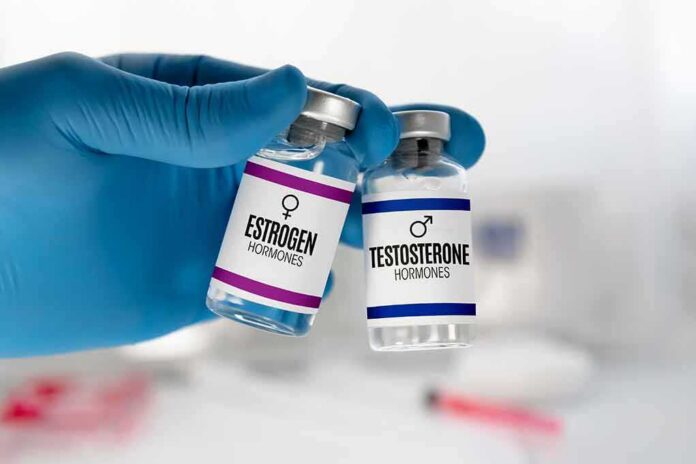
A man’s testosterone level barely predicts whether he feels like having sex on any given day.
Quick Take
- Researchers tracking testosterone daily found no meaningful link between hormone swings and that day’s sexual desire.
- Male sexual desire tends to peak around age 40 and stays fairly steady until age 60.
- Relationship happiness, sleep quality, and stress shape desire more than a hormone number does.
- Testosterone still matters for men with true deficiency, but it is not the whole story of desire.
The Study That Undercuts the Testosterone Myth
Researchers who tracked young men’s testosterone levels day by day found something surprising. A man with higher-than-normal testosterone on a given day did not report more sexual desire that same day. The 2024 study found “no evidence for significant, positive relationships between testosterone and desire”. That result challenges decades of assumptions that hormone levels drive daily changes in libido.
The finding matters because so much marketing around men’s health rests on the opposite idea. Boost the number, boost the drive, the pitch goes. But the men in this study, all with normal hormone levels to begin with, showed no such pattern. Desire moved on its own schedule.
Why Age 40 Isn’t the End of Desire
A separate study found male sexual desire actually peaks around age 40 and stays fairly steady until 60. That timeline runs opposite the popular idea that libido crashes once testosterone starts slipping in a man’s 30s. Testosterone does decline by about one percent a year starting around age 30, but low testosterone does not guarantee low desire.
That gap between hormone charts and real experience is the whole point. A man’s blood work can look diminished on paper while his actual sex life stays strong. The body does not read lab reports the way marketers want men to believe it does.
Relationships and Stress Matter More Than a Blood Test
Researchers studying thousands of adults found sexual desire was closely tied to relationship satisfaction, not hormone panels. Men and women who felt connected to their partners reported stronger desire, regardless of age. Another study found major depressive disorder, not testosterone, was the strongest predictor of sexual problems in the group researchers examined. Mood and connection carried more weight than a lab number.
That should reassure men worried about a routine bloodwork result. A strained marriage or unmanaged anxiety does more damage to a man’s sex life than a modest testosterone dip ever will. The fix often sits at the kitchen table, not the pharmacy counter.
Sleep, Mood, and the Bigger Picture
Poor sleep wrecks a man’s energy, mood, and libido even when his testosterone reading looks normal. One review found sleep problems track closely with erectile trouble and low sex drive, while testosterone itself often stays untouched. Stress, exhaustion, and disconnection from a partner do more daily damage to desire than a slightly lower hormone level ever could.
Men working long shifts, sleeping five hours a night, and skipping time with their spouse should not be surprised when desire fades. The cause usually is not hiding in a hormone panel. It is hiding in the calendar.
What This Means for Men Chasing Hormone Fixes
None of this means testosterone is irrelevant. Men with true hormone deficiency, known as hypogonadism, do see real improvement in desire and sexual activity after treatment. The problem is treating every dip in libido as a hormone problem first. For most men in their 40s and 50s, the fix lives in the marriage, the sleep schedule, and the stress level, not the supplement aisle.
The takeaway fits an old truth many men already sensed. A good marriage, steady sleep, and low stress do more for a man’s sex life than any bottle on a shelf promises. Chasing a number on a lab report while ignoring a strained relationship or chronic exhaustion misses the real lesson buried in the data.
Sources:
menshealth.com, academic.oup.com, pmc.ncbi.nlm.nih.gov, iris.unimore.it