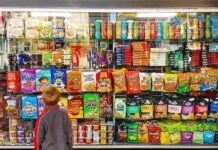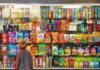
Nearly half of the Cannabidiol products lining store shelves and gas station counters fail to match what their labels promise, and some carry heavy metals or pesticides consumers never agreed to swallow.
Quick Take
- Multiple lab studies found widespread mislabeling of CBD potency in over-the-counter products sold in the United States and abroad.
- The Food and Drug Administration (FDA) only steps in after a safety problem surfaces, since CBD is regulated more like food than medicine.
- Independent lab certificates and third-party certifications exist, but nothing forces every manufacturer to use them.
- Standards groups like the U.S. Pharmacopeia (USP) and NSF want uniform rules, arguing the fix is better standards, not banning the product category.
What The Testing Actually Found
A 2024 lab analysis of commercially sold CBD products found that most samples tested were inaccurately labeled, and some contained heavy metals, residual solvents, or pesticides the label never mentioned. Johns Hopkins Medicine researchers ran a similar test on more than 100 topical CBD products and found the same pattern: widespread mislabeling, with some products containing far less or far more CBD than advertised.
Other studies echo the same conclusion. One review found nearly half of tested products fell outside a 10 percent margin of error on their labeled potency, prompting researchers to call for stronger regulation. Britain’s Food Standards Agency ran its own survey of CBD products sold in England and Wales for the same reason: nobody trusted the labels enough to skip the testing.
This is not a one-country problem. Health Canada’s advisory committee flagged the need for consistent quality standards so consumers get CBD products of reliable strength every time. Brazilian researchers ran a parallel study on CBD products sold under two different import rules and found labeling problems there too. The pattern holds across borders because the root cause is the same: a fast-growing market selling ahead of any single global rulebook.
Why Oversight Lags Behind The Market
The core problem is structural. Nonprescription CBD gets regulated more like a snack food than a drug, so the FDA generally only intervenes once a safety issue is already reported, not before a product hits shelves. That leaves manufacturers largely free to set their own testing standards, and consumers with almost no way to verify a product before buying it.
The FDA does spell out what responsible manufacturing should include: controlling raw materials for pesticides and herbicides, running documented in-process testing, checking microbial limits, and testing product stability over time. Those standards exist and are technically achievable inside a real manufacturing system. The problem is that following them remains voluntary for most sellers, not required.
That gap has pushed several groups to build their own solutions. NSF certifies finished hemp and CBD products against specific standards, and organizations like the Banned Substances Control Group offer third-party certification too. Gillette Children’s hospital advises parents to skip any CBD product that lacks a certificate of analysis from an independent lab showing THC, pesticide, and heavy-metal results. That is sound, practical advice, but it puts the entire burden of quality control on the shopper reading a label in a gas station aisle.
The Case For Real Standards, Not Blanket Bans
The U.S. Pharmacopeia has called for standardized quality rules covering CBD and related compounds specifically to cut down on contaminated or adulterated products reaching consumers. That is the right instinct. Conservatives who favor light-touch regulation should still recognize that a wide-open market with zero baseline testing requirement is not free enterprise, it is a liability lawsuit waiting to happen for honest sellers undercut by shady ones.
Some in the hemp industry are already sounding alarms about how Congress handles intoxicating hemp products, warning that lawmakers risk lumping compliant CBD sellers in with bad actors selling synthetic, unregulated cannabinoids. That distinction matters. A manufacturer running batch-matched lab tests and posting real certificates of analysis is not the same business as a gas station selling unmarked vape cartridges. Smart policy should reward the first group and shut down the second, rather than punishing the whole category equally.
Consumers do not need to wait for Washington to act. Checking for a current, batch-specific certificate of analysis from an accredited lab before buying any CBD product remains the single best protection available right now. Until federal standards catch up with the market, that habit is the difference between buying medicine and buying a guess.
Sources:
artofhealthyliving.com, pmc.ncbi.nlm.nih.gov, fda.gov, gillettechildrens.org, thefrenchhempempire.fr, cbd-alchemy.com, bluegrasshempoil.com, customcbdlabs.com, canada.ca, usp.org, gov.uk, nsf.org, kloris.co, nutraceuticalbusinessreview.com, science.food.gov.uk, healthline.com, congress.gov, bscg.org, broughton-group.com, avmajournals.avma.org, facebook.com, d-nb.info, sciencedirect.com, onlinelibrary.wiley.com, food.gov.uk, hopkinsmedicine.org, assets.publishing.service.gov.uk