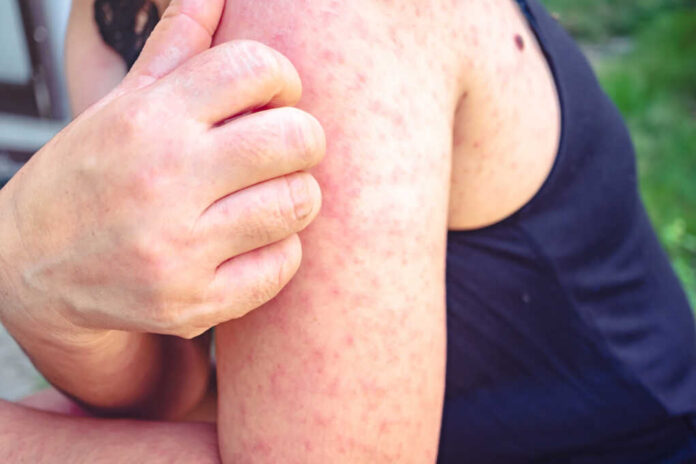
Measles Outbreak in 2025: A Call for Action. A resurgence of measles threatens public health, highlighting the dangers of under-vaccination and inadequate reporting.
Story Highlights
- Measles cases surge across multiple U.S. states, linked to under-vaccinated communities.
- Researchers call for improved disease reporting and surveillance to contain outbreaks
- International travel and large gatherings identified as key transmission factors.
Measles Outbreaks Surge Across U.S.
In 2025, the United States faces a significant measles outbreak, with cases confirmed in Texas, New Mexico, Oklahoma, and Kansas. The resurgence is primarily linked to under-vaccinated populations and international travel, originating from an imported case in New Brunswick in October 2024. By May 2025, Texas alone reported 683 cases, with researchers underscoring the urgent need for improved disease reporting and surveillance.
Measles cases in the U.S. surge to record levels, with Johns Hopkins University reporting 1,277 confirmed cases so far this year — the highest number of cases since the disease was declared eliminated in 2000. https://t.co/hsDtSdRWAL pic.twitter.com/cnvUe4kmIq
— ABC News (@ABC) July 6, 2025
The Role of Vaccination and Public Health Infrastructure
Measles, once nearly eradicated through vaccination, has resurfaced due to declining vaccination rates. Communities with vaccine hesitancy are particularly vulnerable, facilitating the disease’s spread. Researchers emphasize the importance of robust public health infrastructure and transparent data sharing to effectively manage and contain outbreaks. The CDC and WHO have issued alerts, highlighting the urgent need for vaccination and robust surveillance systems.
Despite these efforts, gaps in reporting and delayed responses continue to hinder containment, exacerbating the outbreak’s impact on public health.
Watch: Measles cases surge to record high since disease was declared eliminated in US
Impact and Future Implications
The measles outbreaks have significant short-term impacts, including increased morbidity and strain on healthcare systems. Long-term consequences could involve further outbreaks if vaccination rates remain low, potentially eroding public trust in health systems and increasing healthcare costs. Communities at risk, particularly under-vaccinated populations, face ongoing threats to their health and well-being, with broader implications for public health infrastructure. Political debates are likely to intensify regarding vaccination mandates and public health funding, as the nation grapples with controlling this preventable disease.
Sources:
WHO: 2025 Disease Outbreak News
AMA: 2025 Measles Outbreak and Other Updates
HealthHIV: Infectious Diseases to Watch in 2025